
- Home
- Tutorial
- Resource Guides
- Focus Areas
- LSF Programs
-
Professional
Development - Review Process
-
A project of LSF

Search for Resources
World Food Day
World Food Day
October 16, 2026
Top R4R Picks
Resources for extending the learning
-
Food Waste Hurts Our WorldElementary
-
A Little Food Waste Leads to a LotElementary
-
The Environmental Impact of Wasted FoodSecondary
-
Global Food ChallengeElementary
-
The Circular Economy and Modern AgricultureMiddle, Secondary
-
Pumpkins Against PovertyElementary
-
Top Crop: Farming for the FutureMiddle, Secondary
-
Food Day CurriculumElementary, Middle
-
Fertilizers and the EnvironmentSecondary
-
Nourish Curriculum GuideMiddle, Secondary
-
Food, Farming, and Climate ChangeSecondary
-
When Climate Change Hits HomeSecondary
-
The People's GroceryMiddle, Secondary
-
Sustainable FoodSecondary
-
Up We Grow!Elementary
-
Beatrice’s GoatElementary
World Food Day was established in 1979 by the Food and Agriculture Organization of the United Nations to raise public awareness of global food issues and to strengthen efforts to end hunger and malnutrition.
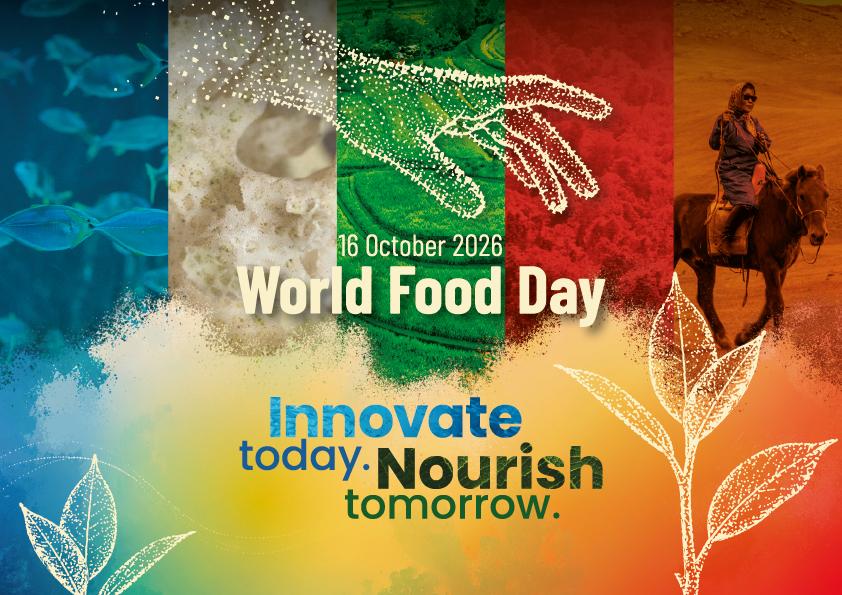
This year’s theme “Innovate today. Nourish tomorrow” focuses attention on the need to transform global agrifood systems through science, technology, and local knowledge to end global hunger and build sustainable diets for all. It will affect how food is produced, stored, transported and marketed and ensure that everyone has enough safe and nutritious food.
It is hoped that students and teachers will mark this occasion by participating in classroom activities that explore key food-related issues and draw attention to the needs of those without physical or economic access to the kinds of nutritious food required for healthy lives.
WHY GET INVOLVED IN WORLD FOOD DAY?
- Food is the third most basic human need after air and water – everyone should have the right to adequate food.
- An estimated 673 million people are living with hunger. (FAO, 2025)
- More than one-third of the world’s children are malnourished and one-half of all child deaths (under age 5) are related to malnutrition. (UNICEF, 2025)
- Three billion people (40% of the world’s population), cannot afford healthy diets, while obesity continues to increase worldwide.(FAO, 2024)
- Most of the world's hungry people are found in the developing world, but over 34 million live in the developed world.* (FAO,2024)
- Food production too often degrades or destroys natural habitats and contributes to species extinction.
- The impact of malnutrition in all its forms - undernutrition, micronutrient deficiencies, as well as overweight and obesity - on the global economy is estimated at USD 3.5 trillion per year. (UBS, 2023)
- Experts agree that there is enough food in the world for everyone to have enough to eat, but it is unevenly distributed.
- Agri-food systems employ 1 billion people worldwide, more than any other economic sector.* (FAO, 2024)
- No other sector is more sensitive to climate change than agriculture.
- By choosing nutritious, diverse diets and reducing food waste, we can help shape a more sustainable agrifood system.
Resources 4 Rethinking encourages students and teachers to participate in World Food Day. Top R4R Picks will connect you to some excellent resources to support these efforts.
More information regarding World Food Day 2026 can be found here.