- Home
- Tutorial
- Resource Guides
- Focus Areas
- LSF Programs
-
Professional
Development - Review Process
-
A project of LSF

Search for Resources
Description
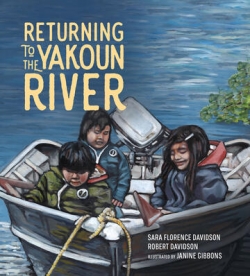
Based on the author’s childhood memories, this story invites readers to experience a Haida fish camp through the eyes of children as they learn from the land and from their Elders. Each summer, a Haida girl and her family travel up the Yakoun River on Haida Gwaii, following the salmon. While their father fishes, the girl and her brother spend their days exploring the land, playing and learning from Tsinii (Grandfather). The story immerses the reader in an Indigenous approach to teaching and learning rooted in place, community and cultural tradition.
General Assessment
Recommendation of how and where to use it
Returning to the Yakoun River illustrates place-based learning by showing how the Yakoun River itself is the central teacher. The children in the story learn through direct experience on the land—observing salmon, gathering water, preparing food, and listening to stories from Tsinii. Their knowledge is rooted in Haida cultural practices tied to that specific river, demonstrating how learning becomes meaningful when connected to local ecosystems, community traditions, and lived experiences on the land. Grades 3 to 6 curriculum links to Social Studies, Science and ELA.
To enhance the learning take students to a local outdoor place, schoolyard or nearby natural area to identify things that teach them such as weather, plants, animals, landforms. Encourage students to sketch or record notes about what they notice and learn from the land. Have them connect back to the book, comparing how they learned from their local environment to how the children in the story learned from the Yakoun River.
Relevant Curriculum Units
The following tool will allow you to explore the relevant curriculum matches for this resource. To start, select a province listed below.
- Step 1Select a province
- Alberta
- Step 2Select a grade level
- Grade 3
- Step 3Select a subject
- English/Language Arts
- Step 4Relevant matches
- Comprehension: Text comprehension is supported through applying varied strategies and processes, and considering both particular contexts and universal themes
- Science
- Step 4Relevant matches
- Living Systems: Understandings of the living world, Earth, and space are deepened through investigating natural systems and their interactions
- Grade 4
- Step 3Select a subject
- English/Language Arts
- Step 4Relevant matches
- Comprehension: Text comprehension is supported by applying varied strategies and processes and by considering both particular contexts and universal themes.
- Grade 5
- Step 3Select a subject
- English/Language Arts
- Step 4Relevant matches
- Comprehension: Text comprehension is supported by applying varied strategies and processes and by considering both particular contexts and universal themes.
- Grade 6
- Step 3Select a subject
- English/Language Arts
- Step 4Relevant matches
- Comprehension: Text comprehension is supported through applying varied strategies and processes, and considering both particular contexts and universal themes
- Science
- Step 4Relevant matches
- Living Systems: Understandings of the living world, Earth, and space are deepened through investigating natural systems and their interactions
- British Columbia
- Step 2Select a grade level
- Grade 3
- Step 3Select a subject
- English/Language Arts
- Step 4Relevant matches
- Stories and other texts help us learn about ourselves, our families, and our communities
- Science
- Step 4Relevant matches
- Science 3: Living things are diverse, can be grouped, and interact in their ecosystems
- Social Studies
- Step 4Relevant matches
- Global Indigenous Peoples: Learning about indigenous peoples nurtures multicultural awareness and respect for diversity.
- Global Indigenous Peoples: Indigenous knowledge is passed down through oral history, traditions, and collective memory.
- Global Indigenous Peoples:Indigenous societies throughout the world value the well-being of the self, the land, spirits, and ancestors
- Grade 4
- Step 3Select a subject
- English/Language Arts
- Step 4Relevant matches
- Exploring stories and other texts helps us understand ourselves and make connections to others and to the world
- Science
- Step 4Relevant matches
- Science 4: All living things sense and respond to their environment
- Grade 5
- Step 3Select a subject
- English/Language Arts
- Step 4Relevant matches
- Exploring stories and other texts helps us understand ourselves and make connections to others and to the world
- Grade 6
- Step 3Select a subject
- English/Language Arts
- Step 4Relevant matches
- Exploring stories and other texts helps us understand ourselves and make connections to others and to the world
- Manitoba
- Step 2Select a grade level
- Grade 3
- Step 3Select a subject
- Indigenous Languages and Cultures
- Step 4Relevant matches
- Cultural and Linguistic Diversity: Other Cultures: Connections and Influences
- Cultural and Linguistic Diversity: Specific Aboriginal Culture
- Science
- Step 4Relevant matches
- Indigenous Peoples Within the Natural World
- Life Science
- Grade 4
- Step 3Select a subject
- English/Language Arts
- Step 4Relevant matches
- Language as Exploration and Design
- Indigenous Languages and Cultures
- Step 4Relevant matches
- Cultural and Linguistic Diversity: Other Cultures: Connections and Influences
- Cultural and Linguistic Diversity: Specific Aboriginal Culture
- Grade 5
- Step 3Select a subject
- English/Language Arts
- Step 4Relevant matches
- Language as Exploration and Design
- Indigenous Languages and Cultures
- Step 4Relevant matches
- Cultural and Linguistic Diversity: Other Cultures: Connections and Influences
- Cultural and Linguistic Diversity: Specific Aboriginal Culture
- Social Studies
- Step 4Relevant matches
- Peoples and Stories of Canada to 1867: First Peoples
- Grade 6
- Step 3Select a subject
- English/Language Arts
- Step 4Relevant matches
- Language as Exploration and Design
- Indigenous Languages and Cultures
- Step 4Relevant matches
- Cultural and Linguistic Diversity: Other Cultures: Connections and Influences
- Cultural and Linguistic Diversity: Specific Aboriginal Culture
- New Brunswick
- Step 2Select a grade level
- Grade 3
- Step 3Select a subject
- English/Language Arts
- Step 4Relevant matches
- Interactions
- Science
- Step 4Relevant matches
- Our Local Environment : Learning and Living Sustainably
- Grade 4
- Step 3Select a subject
- English/Language Arts
- Step 4Relevant matches
- Interactions
- Grade 5
- Step 3Select a subject
- English/Language Arts
- Step 4Relevant matches
- Interactions
- Grade 6
- Step 3Select a subject
- English/Language Arts
- Step 4Relevant matches
- Interactions
- Newfoundland & Labrador
- Step 2Select a grade level
- Grade 3
- Step 3Select a subject
- English/Language Arts
- Step 4Relevant matches
- Reading & Viewing
- Grade 4
- Step 3Select a subject
- English/Language Arts
- Step 4Relevant matches
- Reading & Viewing
- Science
- Step 4Relevant matches
- Habitats and Communities
- Social Studies
- Step 4Relevant matches
- Exploring the Landscapes of Canada
- Grade 5
- Step 3Select a subject
- English/Language Arts
- Step 4Relevant matches
- Reading & Viewing
- Grade 6
- Step 3Select a subject
- English/Language Arts
- Step 4Relevant matches
- Reading & Viewing
- Science
- Step 4Relevant matches
- Diversity of Life
- Northwest Territories
- Step 2Select a grade level
- Grade 3
- Step 3Select a subject
- English/Language Arts
- Step 4Relevant matches
- Stories and other texts help us learn about ourselves, our families, and our communities
- Science
- Step 4Relevant matches
- Science 3:living things are diverse, can be grouped, and interact in their ecosystems
- Social Studies
- Step 4Relevant matches
- Global Indigenous Peoples: Learning about indigenous peoples nurtures awareness and respect for diversity.
- Global Indigenous Peoples: Indigenous knowledge is passed down through oral history, traditions, and collective memory.
- Global Indigenous Peoples: Indigenous societies throughout the world value the well-being of the self, the land, spirits, and ancestors
- Grade 4
- Step 3Select a subject
- English/Language Arts
- Step 4Relevant matches
- Exploring stories and other texts helps us understand ourselves and make connections to others and to the world
- Science
- Step 4Relevant matches
- Science 4: All living things sense and respond to their environment
- Grade 5
- Step 3Select a subject
- English/Language Arts
- Step 4Relevant matches
- Exploring stories and other texts helps us understand ourselves and make connections to others and to the world
- Grade 6
- Step 3Select a subject
- English/Language Arts
- Step 4Relevant matches
- Exploring stories and other texts helps us understand ourselves and make connections to others and to the world
- Nova Scotia
- Step 2Select a grade level
- Grade 3
- Step 3Select a subject
- English/Language Arts
- Step 4Relevant matches
- Reading and Viewing
- Grade 4
- Step 3Select a subject
- English/Language Arts
- Step 4Relevant matches
- Reading & Writing
- Science
- Step 4Relevant matches
- Science 4: Habitats
- Grade 5
- Step 3Select a subject
- English/Language Arts
- Step 4Relevant matches
- Reading & Writng
- Grade 6
- Step 3Select a subject
- English/Language Arts
- Step 4Relevant matches
- Reading and Viewing
- Science
- Step 4Relevant matches
- Science 6: Diversity of Life
- Nunavut
- Step 2Select a grade level
- Grade 3
- Step 3Select a subject
- English/Language Arts
- Step 4Relevant matches
- Comprehend and Respond
- Develop and Celebrate Community
- Grade 4
- Step 3Select a subject
- English/Language Arts
- Step 4Relevant matches
- Develop and Celebrate Community
- Science
- Step 4Relevant matches
- Life Systems: Habitats & Communities
- Grade 5
- Step 3Select a subject
- English/Language Arts
- Step 4Relevant matches
- Celebrate and Build Community
- Grade 6
- Step 3Select a subject
- English/Language Arts
- Step 4Relevant matches
- Celebrate and Build Community
- Science
- Step 4Relevant matches
- Life Systems: Diversity of Living Things
- Ontario
- Step 2Select a grade level
- Grade 3
- Step 3Select a subject
- English/Language Arts
- Step 4Relevant matches
- Language: Comprehension: Understanding and Responding to Texts
- Grade 4
- Step 3Select a subject
- English/Language Arts
- Step 4Relevant matches
- Language: Comprehension: Understanding and Responding to Texts
- Science & Technology
- Step 4Relevant matches
- Life Systems: Habitats and Communities
- Grade 5
- Step 3Select a subject
- English/Language Arts
- Step 4Relevant matches
- Language: Comprehension: Understanding and Responding to Texts
- Grade 6
- Step 3Select a subject
- English/Language Arts
- Step 4Relevant matches
- Language: Comprehension: Understanding and Responding to Texts
- Science & Technology
- Step 4Relevant matches
- Life Systems: Biodiversity
- Prince Edward Island
- Step 2Select a grade level
- Grade 3
- Step 3Select a subject
- English/Language Arts
- Step 4Relevant matches
- Reading and Viewing
- Grade 4
- Step 3Select a subject
- English/Language Arts
- Step 4Relevant matches
- Reading and Viewing
- Science
- Step 4Relevant matches
- Habitats
- Grade 5
- Step 3Select a subject
- English/Language Arts
- Step 4Relevant matches
- Reading and Viewing
- Grade 6
- Step 3Select a subject
- Science
- Step 4Relevant matches
- Diversity of Life
- Quebec
- Step 2Select a grade level
- Grade 3
- Step 3Select a subject
- Science & Technology
- Step 4Relevant matches
- Living Things
- Grade 4
- Step 3Select a subject
- English/Language Arts
- Step 4Relevant matches
- To read and Listen to Literary, Popular and Information -based texts
- Science & Technology
- Step 4Relevant matches
- Living Things
- Grade 6
- Step 3Select a subject
- English/Language Arts
- Step 4Relevant matches
- To read and Listen to Literary, Popular and Information -based texts
- Saskatchewan
- Step 2Select a grade level
- Grade 3
- Step 3Select a subject
- English/Language Arts
- Step 4Relevant matches
- Comprehend and Respond
- Grade 4
- Step 3Select a subject
- English/Language Arts
- Step 4Relevant matches
- Comprehend and Respond
- Science
- Step 4Relevant matches
- Habitats and Communities
- Grade 5
- Step 3Select a subject
- English/Language Arts
- Step 4Relevant matches
- Comprehend and Respond
- Grade 6
- Step 3Select a subject
- English/Language Arts
- Step 4Relevant matches
- Comprehend and Respond
- Science
- Step 4Relevant matches
- Science 6: Life Science: Diversity of Living Things
- Yukon Territory
- Step 2Select a grade level
- Grade 3
- Step 3Select a subject
- English/Language Arts
- Step 4Relevant matches
- Stories and other texts help us learn about ourselves, our families, and our communities
- Science
- Step 4Relevant matches
- Science 3: Living things are diverse, can be grouped, and interact in their ecosystems
- Social Studies
- Step 4Relevant matches
- Global Indigenous Peoples: Learning about indigenous peoples nurtures multicultural awareness and respect for diversity.
- Global Indigenous Peoples: Indigenous knowledge is passed down through oral history, traditions, and collective memory.
- Global Indigenous Peoples:Indigenous societies throughout the world value the well-being of the self, the land, spirits, and ancestors
- Grade 4
- Step 3Select a subject
- English/Language Arts
- Step 4Relevant matches
- Exploring stories and other texts helps us understand ourselves and make connections to others and to the world
- Science
- Step 4Relevant matches
- Science 4: All living things sense and respond to their environment
- Grade 5
- Step 3Select a subject
- English/Language Arts
- Step 4Relevant matches
- Exploring stories and other texts helps us understand ourselves and make connections to others and to the world
- Grade 6
- Step 3Select a subject
- English/Language Arts
- Step 4Relevant matches
- Exploring stories and other texts helps us understand ourselves and make connections to others and to the world
Themes Addressed
Ecosystems (1)
- Appreciating the Natural World
Indigenous Knowledge (2)
- Etuaptmumk/Two-Eyed Seeing
- TEK -- Traditional Ecological Knowledge