- Home
- Tutorial
- Resource Guides
- Focus Areas
- LSF Programs
-
Professional
Development - Review Process
-
A project of LSF

Search for Resources
Description
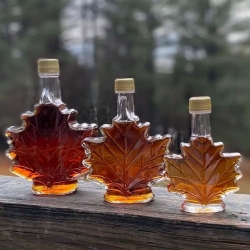
Maple syrup production is a cherished Canadian tradition rooted in Indigenous cultural practices. This lesson explores how climate change impacts maple trees and sweet water harvesting, weaving together science, mathematics, and Traditional Ecological Knowledge. Students learn about tree anatomy, seasonal changes, and sustainability through an Indigenous lens that emphasizes respect for the land and all living beings. Four inquiry-based activities, supported by storytelling videos and hands-on tasks, guide students through the science and cultural significance of maple syrup making as described below:
Activity 1: Activating Prior Knowledge
Students examine a cross-section of a maple tree and discuss how warming climates affect sap flow. Prompt questions encourage observation and critical thinking.
Activity 2: Exploring Tree Structure and Climate Impacts
Learners identify and label tree structures such as xylem, cambium, and phloem, connecting these to sap movement and climate change effects. They create visual representations and explore regional growth patterns.
Activity 3: Maximum/Minimum Scatter Plots
Students analyze temperature data and scatter plots to predict optimal sap flow conditions, linking mathematical reasoning to environmental science.
Activity 4: Consolidation and Reflection
Through guided discussion and reflection, students consider the cultural and ecological consequences of climate change on maple syrup traditions and Indigenous practices.
With cross-curricular connections, a Medicine Wheel teaching framework, and experiential learning, this lesson provides a holistic approach through which students will achieve the following learning outcomes:
- Interpret and create scatter plots to analyze temperature trends
- Describe the structure and function of tree components
- Explain the relationship between climate change and maple syrup production
- Build awareness of Indigenous Knowledge, cultural traditions, and sustainable harvesting
- Recognize the importance of community and environmental stewardship
General Assessment
What skills does this resource explicitly teach?
- Identify and describe real-life situations involving two quantities that are directly proportional;
- Solve problems involving proportions; Research, describe, and report on applications of volume and capacity measurement;
- Determine the Pythagorean relationship, through investigation using a variety of tools;
- Read, interpret, and draw conclusions from primary data and from secondary data, presented in charts, tables, and graphs;
- Compare two attributes or characteristics, using a scatter plot, and determine whether or not the scatter plot suggests a relationship
Strengths
- well-developed lesson plan
- an abundance of resources for teachers
- engaging activities that suit a variety of learning styles
- Built-in opportunities for formative assessment (discussion, reflections, group work).
Weaknesses
- Reading level could be high for some students
- Explicit assessment materials and rubrics are not provided
- At 13 pages, it can feel overwhelming for both teachers and students, especially with limited instructional time.
Recommendation of how and where to use it
This resource can be used in Canadian classrooms as part of a science or interdisciplinary unit on climate change, ecosystems, and human impacts on the environment, particularly in provinces where maple syrup production is culturally or economically significant.
It fits well within middle school science curricula when teaching about plant structures, data analysis, and environmental sustainability.
The lesson is especially effective when used alongside discussions of Indigenous Knowledge and land-based learning, helping students understand the cultural importance of maple syrup in Canada. It can be implemented during biology units, climate change inquiries, or cross-curricular projects that integrate science, math, and social studies.
Relevant Curriculum Units
The following tool will allow you to explore the relevant curriculum matches for this resource. To start, select a province listed below.
- Step 1Select a province
- Alberta
- Step 2Select a grade level
- Grade 7
- Step 3Select a subject
- Science
- Step 4Relevant matches
- Interactions and Ecosystems
- Grade 8
- Grade 9
- Step 3Select a subject
- Environmental Science
- Step 4Relevant matches
- Environment and Outdoor Education: Environmental Core
- Math
- Step 4Relevant matches
- Knowlege And Employability: Patterns and Relations
- Knowlege And Employability: Statistics and Probability
- Patterns and Relations
- Science
- Step 4Relevant matches
- Biological Diversity
- Knowledge and Employability Science: Biological Diversity (Social and Environmental Contexts Emphasis)
- British Columbia
- Manitoba
- Step 2Select a grade level
- Grade 7
- Step 3Select a subject
- Science
- Step 4Relevant matches
- Life Systems
- Grade 8
- Step 3Select a subject
- Science
- Step 4Relevant matches
- Earth Science
- Indigenous Peoples Within the Natural World
- Life Science
- Grade 9
- Step 3Select a subject
- Math
- Step 4Relevant matches
- Patterns & Relations
- New Brunswick
- Newfoundland & Labrador
- Northwest Territories
- Nova Scotia
- Step 2Select a grade level
- Grade 7
- Step 3Select a subject
- Science
- Step 4Relevant matches
- Science 7: Environmental Action
- Grade 8
- Step 3Select a subject
- Science
- Step 4Relevant matches
- Science 8: Climate Change
- Science 8: Healthy Cells, Healthy Systems
- Grade 9
- Step 3Select a subject
- Math
- Step 4Relevant matches
- Patterns and Relations
- Nunavut
- Step 2Select a grade level
- Grade 7
- Step 3Select a subject
- Science
- Step 4Relevant matches
- Interactions and Ecosystems
- Grade 8
- Grade 9
- Step 3Select a subject
- Math
- Step 4Relevant matches
- Knowlege And Employability: Patterns and Relations
- Knowlege And Employability: Statistics and Probability
- Patterns and Relations
- Science
- Step 4Relevant matches
- Biological Diversity
- Knowledge and Employability Science: Biological Diversity (Social and Environmental Contexts Emphasis)
- Ontario
- Step 2Select a grade level
- Grade 7
- Step 3Select a subject
- Science & Technology
- Step 4Relevant matches
- Earth and Space Systems: Heat in the Environment
- Life Systems: Interactions in the Environment
- Grade 8
- Step 3Select a subject
- Math
- Step 4Relevant matches
- Algebra
- Data
- Science & Technology
- Step 4Relevant matches
- Life Systems: Cells
- Grade 9
- Prince Edward Island
- Quebec
- Step 2Select a grade level
- Grade 7
- Step 3Select a subject
- Science & Technology
- Step 4Relevant matches
- The Living World
- Grade 8
- Step 3Select a subject
- Math
- Step 4Relevant matches
- Arithmetic and Algebra
- Science & Technology
- Step 4Relevant matches
- The Living World
- Saskatchewan
- Yukon Territory
Themes Addressed
Air, Atmosphere & Climate (1)
- Climate Change
Food & Agriculture (1)
- Local Food
Indigenous Knowledge (2)
- Rituals, Spirituality and Worldviews
- TEK -- Traditional Ecological Knowledge
Sustainability Education Principles
| Principle | Rating | Explanation |
|---|---|---|
| Consideration of Alternative Perspectives | Very Good | This resource presents multiple perspectives by combining Indigenous Knowledge, scientific data, and real-world climate research. Students analyze evidence, reflect on different viewpoints, and use this information to form and justify their own informed opinions about climate change and environmental stewardship. |
Consideration of Alternative Perspectives:
| ||
| Multiple Dimensions of Problems & Solutions | Very Good | The resource addresses environmental dimensions by examining how climate change affects maple trees and ecosystems, economic dimensions by highlighting impacts on maple syrup production and livelihoods, and social dimensions by emphasizing Indigenous cultural practices and relationships with the land. |
| Multiple Dimensions of Problems & Solutions: Effectively addresses the environmental, economic and social dimensions of the issue(s) being explored.
| ||
| Respects Complexity | Very Good | The resource respects the complexity of the issues by showing how climate change affects ecosystems, cultural practices, and industries simultaneously rather than in isolation. It encourages students to analyze data, consider Indigenous Knowledge, and recognize that environmental problems have interconnected causes and consequences with no simple solutions. |
| Respects Complexity: The complexity of the problems/issues being discussed is respected. | ||
| Acting on Learning | Good | The resource includes clear and meaningful opportunities for students to take action and connect learning to real-world change. These action opportunities are built into the lesson rather than being optional add-ons, but they may still need teacher support to lead to visible outcomes. |
| Acting on Learning: Learning moves from understanding issues to working towards positive change — in personal lifestyle, in school, in the community, or for the planet
| ||
| Values Education | Very Good | Students are provided opportunities to express their own beliefs through reflection questions, discussions, and sharing circles that invite them to consider their relationship with the land, climate change, and sustainability from both scientific and Indigenous perspectives. |
| Values Education: Students are explicitly provided with opportunities to identify, clarify and express their own beliefs/values. | ||
| Empathy & Respect for Humans | Good | Respect for the Indigenous People and traditional methods is certainly fostered in this resource |
| Empathy & Respect for Humans: Empathy and respect are fostered for diverse groups of humans (including different genders, ethnic groups, sexual preferences, etc.). | ||
| Personal Affinity with Earth | Good | Through their exploration of maple trees, consideration of care for the trees, and sharing activities, students will develop a relationship with the land. However, all activities happen in the classroom. |
| Personal Affinity with Earth: Encourages a personal affinity with -the natural world.
| ||
| Locally-Focused Learning | Good | This resource makes learning relevant by connecting climate change to maple syrup production, something students recognize from everyday life in Canada. It has a local focus by linking environmental changes to local ecosystems, industries, and Indigenous knowledge connected to the land. |
| Locally-Focused Learning: Includes learning experiences that take advantage of issues/elements within the local community.
| ||
| Past, Present & Future | Very Good | This resource helps students understand the past by sharing Indigenous knowledge and traditional practices around maple syrup production, connects to the present by examining current climate change impacts on maple trees, and encourages a positive vision for the future by promoting environmental stewardship and responsible relationships with the land. |
| Past, Present & Future: Promotes an understanding of the past, a sense of the present, and a positive vision for the future. | ||
Pedagogical Approaches
| Principle | Rating | Explanation |
|---|---|---|
| Open-Ended Instruction | Very Good | Students analyze data, interpret impacts of climate change, engage with Indigenous knowledge, and reflect on social, environmental, and cultural implications, encouraging diverse viewpoints and informed, personal conclusions. |
| Open-Ended Instruction
: Lessons are structured so that multiple/complex answers are possible; students are not steered toward one 'right' answer. | ||
| Integrated Learning | Very Good | This resource intentionally blends science, math, social studies, Indigenous studies, and environmental education so that the lines between subject areas are blurred, and students apply skills and knowledge across disciplines in an integrated way. |
| Integrated Learning: Learning brings together content and skills from more than one subject area
| ||
| Inquiry Learning | Good | This resource provides guiding questions and structured activities, while allowing students, with teacher support, to clarify questions, interpret data, and draw conclusions, rather than simply follow a fixed set of answers. |
| Inquiry Learning: Learning is directed by questions, problems, or challenges that students work to address.
| ||
| Differentiated Instruction | Good | The variety of activities in this resource addresses well the needs of visual, auditory and kinesthetic learners. However, strategies for learners with difficulties are not provided. |
| Differentiated Instruction: Activities address a range of student learning styles, abilities and readiness.
| ||
| Experiential Learning | Good | This resource involves direct engagement with real-world contexts, such as maple syrup production, climate change data, and Indigenous Knowledge connected to the land. Students analyze authentic issues and evidence, even though most learning activities occur within the classroom rather than beyond school walls. |
| Experiential Learning: Authentic learning experiences are provided
| ||
| Cooperative Learning | Satisfactory | Students will work in groups. |
| Cooperative Learning: Group and cooperative learning strategies are a priority.
| ||
| Assessment & Evaluation | Satisfactory | Specific assessment tools are not provided, however opportunities for formative assessment (discussion, reflections, group work) are built in. |
| Assessment & Evaluation: Tools are provided that help students and teachers to capture formative and summative information about students' learning and performance. These tools may include reflection questions, checklists, rubrics, etc. | ||
| Peer Teaching | Good | The resource intentionally creates opportunities for students to share learning through discussions, reflections, and potentially sharing circles, where peers rely on each other’s insights. |
| Peer Teaching: Provides opportunities for students to actively present their knowledge and skills to peers and/or act as teachers and mentors.
| ||
| Case Studies | Good | Maple syrup production and climate change impacts are relevant, real-world case studies that are clearly grounded in authentic situations students can relate to. |
| Case Studies: Relevant case studies are included. Case studies are thorough descriptions of real events from real situations that students use to explore concepts in an authentic context. | ||
| Locus of Control | Good | While the core content is guided, there is flexibility in focus, perspective, and how students demonstrate understanding. |
| Locus of Control: Meaningful opportunities are provided for students to choose elements of program content, the medium in which they wish to work, and/or to go deeper into a chosen issue. | ||