- Home
- Tutorial
- Resource Guides
- Focus Areas
- LSF Programs
-
Professional
Development - Review Process
-
A project of LSF

Search for Resources
Description
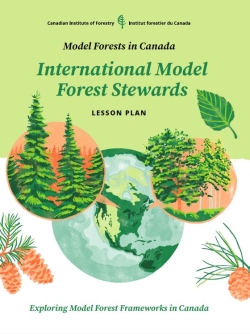
Model Forests bring together diverse stakeholders to support sustainable landscape management that balances environmental, social, cultural, and economic priorities. In this lesson, students explore the concept of Model Forests, learn about their connection to the United Nations Sustainable Development Goals, and investigate how collaborative decision-making can support healthy and sustainable landscapes.
Students will:
- explore the history and purpose of Model Forests in Canada and the International Model Forest Network
- examine the six broad principles of Model Forests, including partnership, sustainability, governance, and knowledge sharing
- investigate the relationship between sustainable forest management and the United Nations Sustainable Development Goals
- work collaboratively to identify a local landscape that could become a Model Forest
- assess stakeholders, sustainability measures, governance structures, and community partnerships within their proposed site
- develop and present a proposal for a new Model Forest using research and evidence-based reasoning
- evaluate and compare proposals through peer assessment and discussion
- consider how local actions can contribute to global sustainability and environmental stewardship.
General Assessment
What skills does this resource explicitly teach?
Students develop research skills as they investigate Model Forests, sustainable development, and potential local sites. They also practice stakeholder analysis, collaboration, project planning, and presentation skills as they work in groups to design and present a proposal for a new Model Forest.
Strengths
- All reproducibles needed to complete the activities are provided and ready to be printed.
- Strong connections are made to the United Nations Sustainable Development Goals and sustainability education.
- The resource is well organized and includes clear learning outcomes, background information, procedures, and assessment tools.
- Students apply their learning to a real-world scenario by proposing a Model Forest for a local landscape.
Weaknesses
- While a peer-assessment rubric is provided, there is no teacher rubric or detailed success criteria for evaluating the presentations.
- The resource does not provide specific accommodations, modifications, differentiated instruction strategies, or alternative assessment options for students diverse learning needs.
- Although students prepare a presentation on a local site that would be a good fit to become a Model Forest, they only present it to their class. It would be good if they could present to their city council or other stakeholders.
Recommendation of how and where to use it
This resource would be excellent to use in Geography, Environmental Science, Social Studies, or Citizenship classes when exploring sustainability, forest management, or the Sustainable Development Goals. It works particularly well as an inquiry- or project-based learning activity, allowing students to apply their learning to a local landscape while developing a deeper understanding of the environmental, social, and economic factors involved in sustainable land management.
Relevant Curriculum Units
The following tool will allow you to explore the relevant curriculum matches for this resource. To start, select a province listed below.
- Step 1Select a province
- Alberta
- British Columbia
- Step 2Select a grade level
- Grade 12
- Step 3Select a subject
- Social Studies
- Step 4Relevant matches
- Physical Geography 12: Incorporating data from a variety of sources allows us to better understand our globally connected world
- Physical Geography 12: Interactions between human activities and the atmosphere affect local and global weather and climate
- Manitoba
- Step 2Select a grade level
- Grade 10
- Step 3Select a subject
- Geography
- Step 4Relevant matches
- Geographic Issues of the 21st Century: Natural Resources
- Grade 12
- Step 3Select a subject
- Social Studies
- Step 4Relevant matches
- Citizenship and Sustainability: Area of Inquiry: Environment
- Global Issues
- Newfoundland & Labrador
- Step 2Select a grade level
- Grade 12
- Step 3Select a subject
- Geography
- Step 4Relevant matches
- World Geography 3200/3202: Ecosystems
- Social Studies
- Step 4Relevant matches
- Social Studies 3201/3202: Human-Environment Interaction
- Nova Scotia
- Step 2Select a grade level
- Grade 12
- Step 3Select a subject
- Social Studies
- Step 4Relevant matches
- Global Sustainable Solutions: Susainable Communities
- Ontario
- Step 2Select a grade level
- Grade 11
- Step 3Select a subject
- Geography
- Step 4Relevant matches
- Forces of Nature: Physical Processes and Disasters (Univ./College Prep.): The Physical Environment: Sustainability and Stewardship
- Forces of Nature: Processes and Disasters (Univ./College Prep.) Geographic Inquiry and Skill Development
- Forces of Nature: processes and Disasters (Univ./College Prep.): Systems: Interactions and Interdependece
- Introduction to Spacial Technologies (Open): Geographic Inquiry and Skill Development
- Introduction to Spacial Technologies: (Open):Using Spacial technologies to Support Sustainability and Stewardship
- Regional Geography (Univ./College Prep.): Geographic Inquiry and Skill Development
- Regional Geography (Univ./College Prep.): Sustainability and Stewardship
- Grade 12
- Step 3Select a subject
- Geography
- Step 4Relevant matches
- Global Connections
- Living in a Sustainable World (Workplace Pep.): Geographic Inquiry and Skill Development
- Living in a Sustainable World (Workplace Prep.) Ecosystems and Human Activity
- Living in a Sustainable World (Workplace Prep.) Community Action
- Living in a Sustainable World (Workplace Prep.) Sustainability of Natural Resources
- Living in a Sustainable World (Workplace Prep.): Species and Spaces
- Spatial Technologies in Action (Univ./College Prep.) Dynamic Impacts within Communities
- The Environment & Resource Management (Univ./College Prep) : Ecological Systems: Interactions and Interdependence
- The Environment & Resource Management (Univ./College Prep.): Methods of Geographic Inquiry and Communication
- The Environment & Resource Management (Univ./College Prep.): Spacial Organizationties
- The Environment & Resource Management (Univ./College Prep.):Sustainability and Stewardship of Natural Resources
- The Environment & Resource Management (Univ/College Prep.) Community Action
- The Environment & Resource Management (Workplace Preparation): Geographic Foundations: Space and Systems
- The Environment & Resource Management (Workplace Preparation): Human-Environment Interactions
- The Environment & Resource Management (Workplace Preparation): Methods of Geographic Inquiry and Communication
- The Environment & Resource Management (Workplace Prfeparation)
- World Geography: Urban Patterns & Population Issues (University/College Prep.) Geographic Inquiry and Skill Development
- World Geography: Urban Patterns & Populations (Univ. / College Prep.) Changing Ecumenes
- World Geography: Urban Patterns & Populations (Univ. / College Prep.): Sustainability and Stewardship
- World Geography: Urban Patterns & Populations (Univ./College Prep.) Spacial Organizations of Ecumenes
- World Geography: Urban Patterns & Populations (Univ./College Prep.) Systems: Interdependence of Ecumenes
- World Issues: A Geographic Analysis (College Prep.):Sustainability and Stewardship
- World Issues: A Geographic Analysis (Univ. Prep.):Geographic Inquiry and Skill Development
- World Issues: A Geographic Analysis (Univ. Prep.):Sustainability and Stewardship
- World issues: A Geographic Analysis (College Prep.) Geographic Inquiry and Skill Development
- Quebec
- Step 2Select a grade level
- Grade 11
- Step 3Select a subject
- Social Studies
- Step 4Relevant matches
- Contemporary World: Environment
- Saskatchewan
- Step 2Select a grade level
- Grade 10
- Step 3Select a subject
- Geography
- Step 4Relevant matches
- Geography 10: Climate
- Grade 11
- Step 3Select a subject
- Social Studies
- Step 4Relevant matches
- Social Studiees 20:World Issues - Environment
- Yukon Territory
- Step 2Select a grade level
- Grade 12
- Step 3Select a subject
- Social Studies
- Step 4Relevant matches
- Physical Geography 12: Interactions between human activities and the atmosphere affect local and global weather and climate
- Urban Studies 12: Decision making in urban and regional planning requires balancing political, economic, social, and environmental factors
- Urban Studies 12: Urban planning decisions and other government policies can dramatically affect the overall quality of life in cities
Themes Addressed
Air, Atmosphere & Climate (1)
- Climate Change
Citizenship (1)
- Community-Building and Participation
Ecosystems (1)
- Appreciating the Natural World
Land Use & Natural Resources (1)
- Forests
Sustainability Education Principles
| Principle | Rating | Explanation |
|---|---|---|
| Consideration of Alternative Perspectives | Good | Students are required to identify and consider the perspectives of different stakeholders, such as governments, industry, and community organizations, when developing their Model Forest proposal. |
Consideration of Alternative Perspectives:
| ||
| Multiple Dimensions of Problems & Solutions | Very Good | The resource explicitly examines environmental, social, and economic dimensions through the Model Forest framework and asks students to consider how these factors interact when planning a sustainable landscape. |
| Multiple Dimensions of Problems & Solutions: Effectively addresses the environmental, economic and social dimensions of the issue(s) being explored.
| ||
| Respects Complexity | Very Good | The resource recognizes that sustainable forest management involves balancing environmental, social, economic, and cultural interests. Students must consider multiple stakeholders and competing priorities, helping them understand that there are no simple solutions to complex sustainability issues. |
| Respects Complexity: The complexity of the problems/issues being discussed is respected. | ||
| Acting on Learning | Good | Taking action is a core part of the lesson, as students develop a proposal for a Model Forest that addresses real sustainability challenges in a local landscape. However, the activity stops at planning and presenting ideas, and students are not asked to implement actions or create observable change in their school or community. |
| Acting on Learning: Learning moves from understanding issues to working towards positive change — in personal lifestyle, in school, in the community, or for the planet
| ||
| Values Education | Good | Students have opportunities to discuss and express their views as they make decisions about sustainability priorities and stakeholder interests in their Model Forest proposal. However, the resource does not explicitly ask students to reflect on or examine their own beliefs and values. |
| Values Education: Students are explicitly provided with opportunities to identify, clarify and express their own beliefs/values. | ||
| Empathy & Respect for Humans | Satisfactory | The resource encourages students to consider and include a variety of stakeholders, including Indigenous peoples, community groups, government agencies, industry, and non-governmental organizations, when making decisions about a Model Forest. |
| Empathy & Respect for Humans: Empathy and respect are fostered for diverse groups of humans (including different genders, ethnic groups, sexual preferences, etc.). | ||
| Personal Affinity with Earth | Good | The resource encourages students to develop an appreciation for forests and sustainable landscape management by exploring the environmental value of local natural areas. However, all activities are done inside the school. |
| Personal Affinity with Earth: Encourages a personal affinity with -the natural world.
| ||
| Locally-Focused Learning | Good | The lesson has a strong local focus, as students are asked to identify and evaluate a provincial, regional, or local landscape that could become a Model Forest. Although the learning is relevant and connected to the local community, the activities do not require students to engage directly with the community or learn outside the classroom. |
| Locally-Focused Learning: Includes learning experiences that take advantage of issues/elements within the local community.
| ||
| Past, Present & Future | Very Good | The resource connects past, present, and future by exploring the history of Model Forests, current sustainability issues, and having students create a plan for a more sustainable future. |
| Past, Present & Future: Promotes an understanding of the past, a sense of the present, and a positive vision for the future. | ||
Pedagogical Approaches
| Principle | Rating | Explanation |
|---|---|---|
| Open-Ended Instruction | Very Good | Students are not guided toward a single "correct" answer. Each group selects its own site and develops its own Model Forest proposal, allowing for multiple valid solutions and approaches to sustainability. |
| Open-Ended Instruction
: Lessons are structured so that multiple/complex answers are possible; students are not steered toward one 'right' answer. | ||
| Integrated Learning | Very Good | The resource brings together concepts and skills from geography, environmental science, social studies, citizenship, and sustainability education. Students apply knowledge from multiple subject areas in a single project, making the connections between disciplines seamless. |
| Integrated Learning: Learning brings together content and skills from more than one subject area
| ||
| Inquiry Learning | Good | Students are given the challenge of proposing a new Model Forest and are provided with a structured process to guide their inquiry. While they have some choice in selecting a site and developing their proposal, the overall questions and framework are provided by the resource. |
| Inquiry Learning: Learning is directed by questions, problems, or challenges that students work to address.
| ||
| Differentiated Instruction | Good | The resource includes a variety of learning activities which support different learning styles. However, it does not provide specific strategies or accommodations for students with learning difficulties. |
| Differentiated Instruction: Activities address a range of student learning styles, abilities and readiness.
| ||
| Experiential Learning | Good | Students work on a real-world sustainability challenge by proposing a Model Forest for a local landscape and considering actual stakeholders and management issues. However, the learning remains in the classroom and does not involve direct experiences beyond the school setting. |
| Experiential Learning: Authentic learning experiences are provided
| ||
| Cooperative Learning | Satisfactory | Students will work in groups. |
| Cooperative Learning: Group and cooperative learning strategies are a priority.
| ||
| Assessment & Evaluation | Good | The resource provides several tools to support assessment, including a planning worksheet, an application template, and a peer-assessment scoring sheet for the final presentations. However, there is no formal evaluation provided for the teacher. |
| Assessment & Evaluation: Tools are provided that help students and teachers to capture formative and summative information about students' learning and performance. These tools may include reflection questions, checklists, rubrics, etc. | ||
| Peer Teaching | Satisfactory | Students present their Model Forest proposals to their classmates, providing opportunities to share their knowledge and learning. However, they do not present to stakeholders. |
| Peer Teaching: Provides opportunities for students to actively present their knowledge and skills to peers and/or act as teachers and mentors.
| ||
| Case Studies | Satisfactory | The resource provides background information on the history and purpose of Model Forests and asks students to apply these concepts to a local site. However, it does not include detailed case studies of real Model Forests that students can analyze in depth. |
| Case Studies: Relevant case studies are included. Case studies are thorough descriptions of real events from real situations that students use to explore concepts in an authentic context. | ||
| Locus of Control | Good | Students have choice in selecting the landscape they will investigate and in how they develop their Model Forest proposal. However, the overall topic, learning goals, and inquiry process are predetermined by the resource. |
| Locus of Control: Meaningful opportunities are provided for students to choose elements of program content, the medium in which they wish to work, and/or to go deeper into a chosen issue. | ||