- Home
- Tutorial
- Resource Guides
- Focus Areas
- LSF Programs
-
Professional
Development - Review Process
-
A project of LSF

Search for Resources
Description
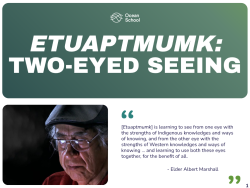
This resource introduces the Mi’kmaw guiding principle of Etuaptmumk (Two-Eyed Seeing), featuring Elder Albert Marshall and scientist Shelley Denny. Together, they explain how combining Indigenous knowledge with Western science can lead to more effective environmental stewardship.
Elder Albert Marshall describes Two-Eyed Seeing as a process of co-learning bringing together the strengths of Indigenous ways of knowing and Western scientific approaches, then applying both to address environmental challenges. Shelley Denny emphasizes the importance of integrating Indigenous values, beliefs, and knowledge into natural resource management.
The video also highlights that protecting the ocean with sustainable resource management requires a broader, ecosystem-based perspective. Rather than focusing solely on fish populations, it encourages consideration of genetics, ecology, habitats, and the interconnectedness of all living systems. Indigenous knowledge, rooted in these connections, complements traditional ecological knowledge and the tools of Western science. Together, these approaches can support the restoration, reclamation, and protection of our natural world.
After exploring how Etuaptmumk (Two-Eyed Seeing) brings together traditional and scientific knowledge, students reflect on where information comes from in their own lives. They are then invited to plan an interview with an Indigenous Knowledge Keeper and a scientist.
General Assessment
Recommendation of how and where to use it
The video and accompanying activity support Grade 9-12 curriculum outcomes in Science, Environmental Science and Indigenous Studies. The activity is presented in both PowerPoint and Google slides inviting students to learn more about knowledge keepers, the Mi'kmaw principle of Two-Eyed Seeing (Etuaptmumk), and the benefits of including different perspectives when exploring environmental issues.
Relevant Curriculum Units
The following tool will allow you to explore the relevant curriculum matches for this resource. To start, select a province listed below.
- Step 1Select a province
- Alberta
- Step 2Select a grade level
- Grade 9
- Step 3Select a subject
- Indigenous Languages and Cultures
- Step 4Relevant matches
- Blackfoot Language and Culture: Community Membership
- Cree Language and Culture: Community Membership
- Grade 10
- Step 3Select a subject
- Indigenous Languages and Cultures
- Step 4Relevant matches
- Cree Language and Culture 10: Community Membership
- Grade 11
- Step 3Select a subject
- Indigenous Languages and Cultures
- Step 4Relevant matches
- Cree Language and Culture 20: Community Membership
- Grade 12
- Step 3Select a subject
- Indigenous Studies
- Step 4Relevant matches
- Aboriginal Studies 30: Aboriginal World Issues
- British Columbia
- Step 2Select a grade level
- Grade 9
- Step 3Select a subject
- Science
- Step 4Relevant matches
- Science 9: The biosphere, geosphere, hydrosphere, and atmosphere are interconnected, as matter cycles and energy flows through them.
- Grade 11
- Step 3Select a subject
- Environmental Science
- Step 4Relevant matches
- Environmental Science 11: Human practices affect the sustainability of ecosystems
- Environmental Science 11:Humans can play a role in stewardship and restoration of ecosystems
- Science
- Step 4Relevant matches
- Science for Citizenship 11: Scientific understanding enables humans to respond and adapt to changes locally and globally
- Grade 12
- Step 3Select a subject
- Environmental Science
- Step 4Relevant matches
- Environmental Science 12: Human actions affect the quality of water and its ability to sustain life.
- Manitoba
- Step 2Select a grade level
- Grade 9
- Step 3Select a subject
- Indigenous Languages and Cultures
- Step 4Relevant matches
- Cultural and Linguistic Diversity: Other Cultures: Connections and Influences
- Grade 10
- Step 3Select a subject
- Indigenous Languages and Cultures
- Step 4Relevant matches
- Cultural and Linguistic Diversity: Other Cultures: Connections and Influences
- Grade 11
- Step 3Select a subject
- Indigenous Languages and Cultures
- Step 4Relevant matches
- Cultural and Linguistic Diversity: Other Cultures: Connections and Influences
- Grade 12
- Step 3Select a subject
- Indigenous Languages and Cultures
- Step 4Relevant matches
- Cultural and Linguistic Diversity: Other Cultures: Connections and Influences
- Northwest Territories
- Step 2Select a grade level
- Grade 9
- Step 3Select a subject
- Science
- Step 4Relevant matches
- Science 9: The biosphere, geosphere, hydrosphere, and atmosphere are interconnected, as matter cycles and energy flows through them.
- Grade 11
- Step 3Select a subject
- Environmental Science
- Step 4Relevant matches
- Environmental Science 11: Human practices affect the sustainability of ecosystems
- Environmental Science 11:Humans can play a role in stewardship and restoration of ecosystems
- Science
- Step 4Relevant matches
- Science for Citizenship 11: Scientific understanding enables humans to respond and adapt to changes locally and globally
- Grade 12
- Step 3Select a subject
- Environmental Science
- Step 4Relevant matches
- Environmental Science 12: Human actions affect the quality of water and its ability to sustain life.
- Science
- Step 4Relevant matches
- Experiential Science 30, Freshwater Systems:Freshwater Resource Management
- Nova Scotia
- Step 2Select a grade level
- Grade 10
- Step 3Select a subject
- Indigenous Studies
- Step 4Relevant matches
- Mi'Kmaq Studies: Culture
- Mi’Kmaq: Education
- Grade 11
- Step 3Select a subject
- Indigenous Studies
- Step 4Relevant matches
- Mi'kmaw Studies 11: Education
- Mi'kmaw Studies 11:Culture
- Grade 12
- Step 3Select a subject
- Indigenous Studies
- Step 4Relevant matches
- Netukulimk 12: Interconnectiveness in Mi'kma'ki
- Nunavut
- Step 2Select a grade level
- Grade 10
- Step 3Select a subject
- Indigenous Languages and Cultures
- Step 4Relevant matches
- Relationship to the Environment
- Science
- Step 4Relevant matches
- Experiential Science 10, Terrestial Systems: Resource Management and Population Dynamics
- Grade 12
- Step 3Select a subject
- Science
- Step 4Relevant matches
- Experiential Science 30, Freshwater Systems:Freshwater Resource Management
- Ontario
- Step 2Select a grade level
- Grade 11
- Step 3Select a subject
- Indigenous Studies
- Step 4Relevant matches
- World Views and Aspirations of First Nations, Métis, and Inuit Communities in Canada (Workplace prep.) Understanding and Respecting World Views and Cultural Diversity
- Saskatchewan
- Step 2Select a grade level
- Grade 11
- Step 3Select a subject
- Indigenous Studies
- Step 4Relevant matches
- Native Studies 20: Development
- Yukon Territory
- Step 2Select a grade level
- Grade 9
- Step 3Select a subject
- Science
- Step 4Relevant matches
- Science 9: The biosphere, geosphere, hydrosphere, and atmosphere are interconnected, as matter cycles and energy flows through them.
- Grade 11
- Step 3Select a subject
- Environmental Science
- Step 4Relevant matches
- Environmental Science 11: Human practices affect the sustainability of ecosystems
- Environmental Science 11:Humans can play a role in stewardship and restoration of ecosystems
- Science
- Step 4Relevant matches
- Science for Citizenship 11: Scientific understanding enables humans to respond and adapt to changes locally and globally
- Grade 12
- Step 3Select a subject
- Environmental Science
- Step 4Relevant matches
- Environmental Science 12: Human actions affect the quality of water and its ability to sustain life.
Themes Addressed
Ecosystems (1)
- Appreciating the Natural World
Indigenous Knowledge (2)
- Etuaptmumk/Two-Eyed Seeing
- TEK -- Traditional Ecological Knowledge
Science and Technology (1)
- Alternative Ways of Doing Science