- Home
- Tutorial
- Resource Guides
- Focus Areas
- LSF Programs
-
Professional
Development - Review Process
-
A project of LSF

Search for Resources
Description
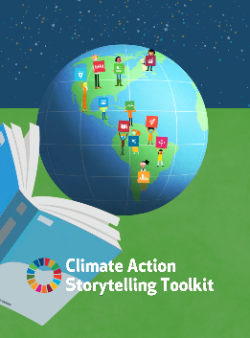
The Climate Action Storytelling Toolkit is an educational resource designed to help students use storytelling to inspire climate action and deepen biodiversity awareness. The toolkit encourages students to move beyond passive learning and become active advocates for the Earth through creative expression. By exploring three distinct mediums, film, poetry, and collage art, students learn how to transform environmental awareness into compelling narratives that inspire action. Whether imagining hopeful futures, advocating for nature restoration, or reflecting on biodiversity in their own communities, these lessons empower young learners to become confident storytellers and changemakers for climate action and biodiversity awareness.
Each lesson plan includes engaging activities and discussion questions designed to strengthen storytelling skills while deepening students’ understanding of the Sustainable Development Goals (SDGs).
Collage Art: Hopes for Our Planet - Students explore biodiversity and their hopes for the planet through a nature walk and collage making. Outside, they collect natural materials; back inside, they combine found objects, prints, and drawings on a heart-shaped canvas to create a personal vision for a thriving 2030
Poetry: Voices of the Earth – This lesson plan uses performance poetry to bridge the gap between environmental science and creative writing. By analysing the poem: Hope by Salome Agbaroji students explore how personification can create an emotional connection that facts and figures often miss. Students will move from being passive listeners to active advocates, craft their own "voice for the voiceless, " and perform their work in class
Film: Wild Futures for Storytelling - Through a video accompanied by a lesson plan, students explore how their love for nature can inspire real-world action. They’ll go behind the scenes of Open Planet’s film Ocean with David Attenborough, discovering how storyboarding, narration, and creative storytelling shape powerful messages about protecting our planet and building hope for the future.
The resource provides an extension component entitled The Learning Guide on Ecosystem Restoration designed for older students to deepen their advocacy skills. This module invites learners to explore the urgent need for ecosystem restoration and understand their role in shaping a more sustainable future. It includes a three-part learning journey with relevant background information, video-based contents, interactive visuals, guided research, and systems thinking activities designed to inspire reflection and action.
General Assessment
Strengths
- The topic is current and effectively builds understanding of climate change, biodiversity, and environmental stewardship, helping students connect global issues to their own lives
- The resource is thorough and easy to use and provides easy to follow steps and materials needed
- Teachers can adapt activities to suit different learners, abilities, and classroom context
- Students are given meaningful opportunities to express their beliefs, values, and perspectives
- The activities foster a personal affinity with nature and encourages students to think about their role in environmental protection
Weaknesses
- The resource is more of a guided inquiry, students have limited opportunity to generate independent research questions or conduct deeper investigations
- Actiivites are classroom based instead of outdoor learning. Needs to provide experiential learning opportunities
Relevant Curriculum Units
The following tool will allow you to explore the relevant curriculum matches for this resource. To start, select a province listed below.
- Step 1Select a province
- Alberta
- Step 2Select a grade level
- Grade 3
- Step 3Select a subject
- Arts
- Step 4Relevant matches
- Visual Arts
- English/Language Arts
- Step 4Relevant matches
- Writing: Ideas and information can be articulated accurately and imaginatively through the use of writing processes and an understanding of the author’s craft.
- Science
- Step 4Relevant matches
- Living Systems: Understandings of the living world, Earth, and space are deepened through investigating natural systems and their interactions
- Grade 4
- Step 3Select a subject
- Arts
- Step 4Relevant matches
- Visual Arts
- English/Language Arts
- Step 4Relevant matches
- Writing: Ideas and information can be articulated accurately and imaginatively through the use of writing processes and an understanding of the author’s craft
- Grade 5
- Step 3Select a subject
- Arts
- Step 4Relevant matches
- Visual Arts
- English/Language Arts
- Step 4Relevant matches
- Writing: Ideas and information can be articulated accurately and imaginatively through the use of writing processes and an understanding of the author’s craft
- Grade 6
- Step 3Select a subject
- English/Language Arts
- Step 4Relevant matches
- Writing: Ideas and information can be articulated accurately and imaginatively through the use of writing processes and an understanding of the author’s craft
- Science
- Step 4Relevant matches
- Earth Systems: Understandings of the living world, Earth, and space are deepened through investigating natural systems and their interactions.
- Visual Art
- Step 4Relevant matches
- Visual Arts
- Grade 7
- Step 3Select a subject
- Arts
- Step 4Relevant matches
- Arts: Visual Art
- English/Language Arts
- Step 4Relevant matches
- Explore Thoughts, Ideas, Feelings and Experiences
- Science
- Step 4Relevant matches
- Interactions and Ecosystems
- Grade 8
- Step 3Select a subject
- English/Language Arts
- Step 4Relevant matches
- Explore Thoughts, Ideas, Feelings and Experiences
- Visual Art
- Step 4Relevant matches
- Visual Arts: Compositon
- British Columbia
- Step 2Select a grade level
- Grade 3
- Step 3Select a subject
- Arts
- Step 4Relevant matches
- Arts Education: Dance, drama, music, and visual arts are each unique languages for creating and communicating
- English/Language Arts
- Step 4Relevant matches
- Using language in creative and playful ways helps us understand how language works
- Science
- Step 4Relevant matches
- Science 3: Living things are diverse, can be grouped, and interact in their ecosystems
- Grade 4
- Step 3Select a subject
- Arts
- Step 4Relevant matches
- Arts Education: Dance, drama, music, and visual arts are each unique languages for creating and communicating.
- English/Language Arts
- Step 4Relevant matches
- Using language in creative and playful ways helps us understand how language works
- Science
- Step 4Relevant matches
- Science 4: All living things sense and respond to their environment
- Grade 5
- Step 3Select a subject
- Arts
- Step 4Relevant matches
- Arts Education: Dance, drama, music and visual arts are each unique languages for creating and communicating.
- English/Language Arts
- Step 4Relevant matches
- Using language in creative and playful ways helps us understand how language works
- Grade 6
- Step 3Select a subject
- Arts
- Step 4Relevant matches
- Arts Education: Dance, drama, music, and visual arts are each unique languages for creating and communicating.
- English/Language Arts
- Step 4Relevant matches
- Exploring and sharing multiple perspectives extends our thinking
- Grade 7
- Step 3Select a subject
- Arts
- Step 4Relevant matches
- Arts Education: Dance, drama, music, and visual arts are each unique languages for creating and communicating
- English/Language Arts
- Step 4Relevant matches
- Exploring and sharing multiple perspectives extends our thinking.
- Grade 8
- Step 3Select a subject
- Arts
- Step 4Relevant matches
- Arts Education: Dance, drama, music, and visual arts are each unique languages for creating and communicating.
- English/Language Arts
- Step 4Relevant matches
- People understand text differently depending on their worldviews and perspective
- Manitoba
- Step 2Select a grade level
- Grade 3
- Step 3Select a subject
- Arts
- Step 4Relevant matches
- Visual Arts
- English/Language Arts
- Step 4Relevant matches
- Language as System
- Science
- Step 4Relevant matches
- Life Science
- Grade 4
- Step 3Select a subject
- Arts
- Step 4Relevant matches
- Visual Arts
- English/Language Arts
- Step 4Relevant matches
- Language as System
- Grade 5
- Step 3Select a subject
- Arts
- Step 4Relevant matches
- Arts: Visual Art
- English/Language Arts
- Step 4Relevant matches
- Language as System
- Grade 6
- Step 3Select a subject
- Arts
- Step 4Relevant matches
- Arts: Visual Art
- English/Language Arts
- Step 4Relevant matches
- Language as System
- Grade 7
- Step 3Select a subject
- Arts
- Step 4Relevant matches
- Arts: Visual Art
- English/Language Arts
- Step 4Relevant matches
- Language as System
- Grade 8
- Step 3Select a subject
- Arts
- Step 4Relevant matches
- Arts: Visual Art
- English/Language Arts
- Step 4Relevant matches
- Language as System
- New Brunswick
- Step 2Select a grade level
- Grade 3
- Step 3Select a subject
- English/Language Arts
- Step 4Relevant matches
- Interactions
- Visual Art
- Step 4Relevant matches
- Create
- Grade 4
- Step 3Select a subject
- Arts
- Step 4Relevant matches
- Arts General: Creating, Making, and Presenting
- English/Language Arts
- Step 4Relevant matches
- Interactions
- Visual Art
- Step 4Relevant matches
- Create
- Grade 5
- Step 3Select a subject
- Arts
- Step 4Relevant matches
- Arts General: Creating, Making, and Presenting
- English/Language Arts
- Step 4Relevant matches
- Interactions
- Visual Art
- Step 4Relevant matches
- Create
- Grade 6
- Step 3Select a subject
- English/Language Arts
- Step 4Relevant matches
- Interactions
- Science
- Step 4Relevant matches
- Wayfinding: Making sense of your world: Learning and Living Sustainably
- Visual Art
- Step 4Relevant matches
- Create
- Grade 7
- Step 3Select a subject
- English/Language Arts
- Step 4Relevant matches
- Interactions
- Visual Art
- Step 4Relevant matches
- Create
- Grade 8
- Step 3Select a subject
- English/Language Arts
- Step 4Relevant matches
- Interactions
- Visual Art
- Step 4Relevant matches
- Create
- Newfoundland & Labrador
- Step 2Select a grade level
- Grade 3
- Step 3Select a subject
- Arts
- Step 4Relevant matches
- Arts: Creating, Making, and Presenting
- Grade 4
- Step 3Select a subject
- Arts
- Step 4Relevant matches
- Art: Creating, Making, and Presenting
- English/Language Arts
- Step 4Relevant matches
- Writing & Other Ways of Representing
- Science
- Step 4Relevant matches
- Habitats and Communities
- Grade 5
- Step 3Select a subject
- Arts
- Step 4Relevant matches
- Arts: Creating, Making, and Presenting
- English/Language Arts
- Step 4Relevant matches
- Writing & Other Ways of Representing
- Grade 6
- Step 3Select a subject
- English/Language Arts
- Step 4Relevant matches
- Writing & Representing
- Science
- Step 4Relevant matches
- Diversity of Life
- Visual Art
- Step 4Relevant matches
- Art: Creating, Making, and Presenting
- Grade 7
- Step 3Select a subject
- Arts
- Step 4Relevant matches
- Creating, Making and Presenting
- Visual Art
- English/Language Arts
- Step 4Relevant matches
- Writing & Other Ways of Representing
- Science
- Step 4Relevant matches
- Interaction of Ecosystems
- Grade 8
- Step 3Select a subject
- Arts
- Step 4Relevant matches
- Creating, Making and Presenting
- Visual Art
- English/Language Arts
- Step 4Relevant matches
- Writing and Other Forms of Representation
- Northwest Territories
- Step 2Select a grade level
- Grade 3
- Step 3Select a subject
- Arts
- Step 4Relevant matches
- Arts Education: Dance, drama, music, and visual arts are each unique languages for creating and communicating
- English/Language Arts
- Step 4Relevant matches
- Using language in creative and playful ways helps us understand how language works
- Science
- Step 4Relevant matches
- Science 3:living things are diverse, can be grouped, and interact in their ecosystems
- Grade 4
- Step 3Select a subject
- Arts
- Step 4Relevant matches
- Arts Education: Dance, drama, music, and visual arts are each unique languages for creating and communicating.
- English/Language Arts
- Step 4Relevant matches
- Using language in creative and playful ways helps us understand how language works
- Science
- Step 4Relevant matches
- Science 4: All living things sense and respond to their environment
- Grade 5
- Step 3Select a subject
- Arts
- Step 4Relevant matches
- Arts Education: Dance, drama, music and visual arts are each unique languages for creating and communicating.
- English/Language Arts
- Step 4Relevant matches
- Using language in creative and playful ways helps us understand how language works
- Grade 6
- Step 3Select a subject
- Arts
- Step 4Relevant matches
- Arts Education: Dance, drama, music, and visual arts are each unique languages for creating and communicating.
- English/Language Arts
- Step 4Relevant matches
- Exploring and sharing multiple perspectives extends our thinking
- Grade 7
- Step 3Select a subject
- Arts
- Step 4Relevant matches
- Arts Education: Dance, drama, music, and visual arts are each unique languages for creating and communicating
- English/Language Arts
- Step 4Relevant matches
- Exploring and sharing multiple perspectives extends our thinking.
- Grade 8
- Step 3Select a subject
- Arts
- Step 4Relevant matches
- Arts Education: Dance, drama, music, and visual arts are each unique languages for creating and communicating.
- English/Language Arts
- Step 4Relevant matches
- People understand text differently depending on their worldviews and perspective
- Nova Scotia
- Step 2Select a grade level
- Grade 3
- Step 3Select a subject
- English/Language Arts
- Step 4Relevant matches
- Writing and Representing
- Visual Art
- Step 4Relevant matches
- Visual Arts 3:Create
- Grade 4
- Step 3Select a subject
- English/Language Arts
- Step 4Relevant matches
- Writing & Representing
- Visual Art
- Step 4Relevant matches
- Visual Arts 4: Create
- Grade 5
- Step 3Select a subject
- English/Language Arts
- Step 4Relevant matches
- Writing and Representing
- Visual Art
- Step 4Relevant matches
- Visual Arts 5: Create
- Grade 6
- Step 3Select a subject
- English/Language Arts
- Step 4Relevant matches
- Writing and Representing
- Science
- Step 4Relevant matches
- Science 6: Diversity of Life
- Visual Art
- Step 4Relevant matches
- Visual Arts 6: Create
- Grade 7
- Step 3Select a subject
- English/Language Arts
- Step 4Relevant matches
- English Language Arts 7
- Science
- Step 4Relevant matches
- Science 7: Environmental Action
- Visual Art
- Step 4Relevant matches
- Visual Arts 7: Creating Art
- Grade 8
- Step 3Select a subject
- Science
- Step 4Relevant matches
- Science 8: Climate Change
- Visual Art
- Step 4Relevant matches
- Visual Arts 8: Creating Art
- Nunavut
- Step 2Select a grade level
- Grade 3
- Step 3Select a subject
- Arts
- Step 4Relevant matches
- Arts Education 3 : Creative/Productive
- English/Language Arts
- Step 4Relevant matches
- Interpret & Analyse
- Grade 4
- Step 3Select a subject
- Arts
- Step 4Relevant matches
- Arts Education 4: Creative/Productive
- English/Language Arts
- Step 4Relevant matches
- Interpret and Analyse
- Science
- Step 4Relevant matches
- Life Systems: Habitats & Communities
- Grade 5
- Step 3Select a subject
- Arts
- Step 4Relevant matches
- Arts Education 5: Creative/Productive
- English/Language Arts
- Step 4Relevant matches
- Plan, Focus, Interpret & Analyse
- Grade 6
- Step 3Select a subject
- Arts
- Step 4Relevant matches
- Arts Education 6: Creative/Productive
- English/Language Arts
- Step 4Relevant matches
- Enhance Clarity and Artistry of Communication
- Science
- Step 4Relevant matches
- Life Systems: Diversity of Living Things
- Grade 7
- Step 3Select a subject
- Arts
- Step 4Relevant matches
- Arts Education 7: Creative/Productive
- English/Language Arts
- Step 4Relevant matches
- Clarify and enhance
- Science
- Step 4Relevant matches
- Interactions and Ecosystems
- Grade 8
- Step 3Select a subject
- Arts
- Step 4Relevant matches
- Arts Education 8: Creative Productive
- English/Language Arts
- Step 4Relevant matches
- Comprehend and Respond
- Ontario
- Step 2Select a grade level
- Grade 3
- Step 3Select a subject
- Arts
- Step 4Relevant matches
- Arts: Visual Arts
- English/Language Arts
- Step 4Relevant matches
- Language: Composition: Expressing Ideas and Creating Texts
- Grade 4
- Step 3Select a subject
- Arts
- Step 4Relevant matches
- Arts: Visual Arts
- English/Language Arts
- Step 4Relevant matches
- Language: Composition: Expressing Ideas and Creating Texts
- Science & Technology
- Step 4Relevant matches
- Life Systems: Habitats and Communities
- Grade 5
- Step 3Select a subject
- Arts
- Step 4Relevant matches
- Arts: Visual Arts
- English/Language Arts
- Step 4Relevant matches
- Language: Composition: Expressing Ideas and Creating Texts
- Grade 6
- Step 3Select a subject
- Arts
- Step 4Relevant matches
- Arts: Visual Arts
- English/Language Arts
- Step 4Relevant matches
- Language: Composition: Expressing Ideas and Creating Texts
- Science & Technology
- Step 4Relevant matches
- Life Systems: Biodiversity
- Grade 7
- Step 3Select a subject
- Arts
- Step 4Relevant matches
- Arts: Visual Arts
- English/Language Arts
- Step 4Relevant matches
- Language: Composition: Expressing Ideas and Creating Texts:
- Science & Technology
- Step 4Relevant matches
- Life Systems: Interactions in the Environment
- Grade 8
- Step 3Select a subject
- Arts
- Step 4Relevant matches
- Arts: Visual Arts
- English/Language Arts
- Step 4Relevant matches
- Language: Writing
- Prince Edward Island
- Step 2Select a grade level
- Grade 3
- Step 3Select a subject
- Arts
- Step 4Relevant matches
- Visual Arts 1: Creating and Presenting
- English/Language Arts
- Step 4Relevant matches
- Writing and Other Ways of Representing
- Grade 4
- Step 3Select a subject
- English/Language Arts
- Step 4Relevant matches
- Writing and Other Ways of Representing
- Science
- Step 4Relevant matches
- Habitats
- Visual Art
- Step 4Relevant matches
- Visual Arts: Creating and Presenting
- Grade 5
- Step 3Select a subject
- English/Language Arts
- Step 4Relevant matches
- Writing and Other Ways of Representing
- Visual Art
- Step 4Relevant matches
- Visual Arts: Creating and Presenting
- Grade 6
- Step 3Select a subject
- English/Language Arts
- Step 4Relevant matches
- Writing and Other Ways of Representing
- Science
- Step 4Relevant matches
- Diversity of Life
- Visual Art
- Step 4Relevant matches
- Visual Arts: Creating and Presenting
- Grade 7
- Step 3Select a subject
- English/Language Arts
- Step 4Relevant matches
- Writing and Other Ways of Representing
- Grade 8
- Step 3Select a subject
- English/Language Arts
- Step 4Relevant matches
- Writing and Other Ways of Representing
- Quebec
- Step 2Select a grade level
- Grade 3
- Step 3Select a subject
- Arts
- Step 4Relevant matches
- Arts: Visual Arts: To produce individual works in the visual arts
- English/Language Arts
- Step 4Relevant matches
- To write self - expressive narrative and information -
- Science & Technology
- Step 4Relevant matches
- Living Things
- Grade 4
- Step 3Select a subject
- Arts
- Step 4Relevant matches
- Arts: Visual Arts: To produce individual works in the visual arts
- English/Language Arts
- Step 4Relevant matches
- To write self - expressive narrative and information -
- Science & Technology
- Step 4Relevant matches
- Living Things
- Grade 5
- Step 3Select a subject
- Arts
- Step 4Relevant matches
- Arts: Visual Arts: To produce individual works in the visual arts
- English/Language Arts
- Step 4Relevant matches
- To write self - expressive narrative and information -
- Science & Technology
- Step 4Relevant matches
- Living Things
- Grade 6
- Step 3Select a subject
- Arts
- Step 4Relevant matches
- Arts: Visual Arts: To produce individual works in the visual arts
- English/Language Arts
- Step 4Relevant matches
- To represent her/his literacy in different media
- Science & Technology
- Step 4Relevant matches
- Living Things
- Grade 7
- Step 3Select a subject
- Arts
- Step 4Relevant matches
- Arts: Visual Arts: Creates personal images
- English/Language Arts
- Step 4Relevant matches
- Reads and listens to written, spoken and media texts
- Grade 8
- Step 3Select a subject
- English/Language Arts
- Step 4Relevant matches
- Writes a variety of genres for personal and social purposes
- Saskatchewan
- Step 2Select a grade level
- Grade 3
- Step 3Select a subject
- Arts
- Step 4Relevant matches
- Arts Education 3 : Creative/Productive
- English/Language Arts
- Step 4Relevant matches
- Compose and Create
- Grade 4
- Step 3Select a subject
- Arts
- Step 4Relevant matches
- Arts Education 4: Creative/Productive
- English/Language Arts
- Step 4Relevant matches
- Compose and Create
- Science
- Step 4Relevant matches
- Habitats and Communities
- Grade 5
- Step 3Select a subject
- Arts
- Step 4Relevant matches
- Arts Education 5: Creative/Productive
- English/Language Arts
- Step 4Relevant matches
- Compose and Create
- Grade 6
- Step 3Select a subject
- Arts
- Step 4Relevant matches
- Arts Education 6: Creative/Productive
- English/Language Arts
- Step 4Relevant matches
- Compose and Create
- Science
- Step 4Relevant matches
- Science 6: Life Science: Diversity of Living Things
- Grade 7
- Step 3Select a subject
- Arts
- Step 4Relevant matches
- Arts Education 7: Creative/Productive
- English/Language Arts
- Step 4Relevant matches
- Compose and Create
- Science
- Step 4Relevant matches
- Science 7: Life Science: Interactions within Ecosystems
- Grade 8
- Step 3Select a subject
- Arts
- Step 4Relevant matches
- Arts Education 8: Creative Productive
- English/Language Arts
- Step 4Relevant matches
- Compose and Create
- Yukon Territory
- Step 2Select a grade level
- Grade 3
- Step 3Select a subject
- Arts
- Step 4Relevant matches
- Arts Education: Dance, drama, music, and visual arts are each unique languages for creating and communicating
- English/Language Arts
- Step 4Relevant matches
- Using language in creative and playful ways helps us understand how language works
- Science
- Step 4Relevant matches
- Science 3: Living things are diverse, can be grouped, and interact in their ecosystems
- Grade 4
- Step 3Select a subject
- Arts
- Step 4Relevant matches
- Arts Education: Dance, drama, music, and visual arts are each unique languages for creating and communicating.
- English/Language Arts
- Step 4Relevant matches
- Using language in creative and playful ways helps us understand how language works
- Science
- Step 4Relevant matches
- Science 4: All living things sense and respond to their environment
- Grade 5
- Step 3Select a subject
- Arts
- Step 4Relevant matches
- Arts Education: Dance, drama, music and visual arts are each unique languages for creating and communicating.
- English/Language Arts
- Step 4Relevant matches
- Using language in creative and playful ways helps us understand how language works
- Grade 6
- Step 3Select a subject
- Arts
- Step 4Relevant matches
- Arts Education: Dance, drama, music, and visual arts are each unique languages for creating and communicating.
- English/Language Arts
- Step 4Relevant matches
- Exploring and sharing multiple perspectives extends our thinking
- Grade 7
- Step 3Select a subject
- Arts
- Step 4Relevant matches
- Arts Education: Dance, drama, music, and visual arts are each unique languages for creating and communicating
- English/Language Arts
- Step 4Relevant matches
- Exploring and sharing multiple perspectives extends our thinking.
- Grade 8
- Step 3Select a subject
- Arts
- Step 4Relevant matches
- Arts Education: Dance, drama, music, and visual arts are each unique languages for creating and communicating.
- English/Language Arts
- Step 4Relevant matches
- People understand text differently depending on their worldviews and perspective
Themes Addressed
Air, Atmosphere & Climate (1)
- Climate Change
Citizenship (1)
- General Guide to Taking Action
Ecosystems (2)
- Appreciating the Natural World
- Biodiversity
Sustainability Education Principles
| Principle | Rating | Explanation |
|---|---|---|
| Consideration of Alternative Perspectives | Very Good | The toolkit is designed to help students find their voice as advocates of the Earth. Students learn how to translate environmental awareness into compelling narratives that inspire action. The resource demonstrates moderate consideration of alternative perspectives through creative storytelling, personal reflection, and discussion-based activities. Students are encouraged to express diverse experiences and viewpoints related to climate action and biodiversity. |
Consideration of Alternative Perspectives:
| ||
| Multiple Dimensions of Problems & Solutions | Good | The resource addresses the environmental and social dimensions of climate change and biodiversity issues. Students explore environmental stewardship, human relationships with nature, community action, emotional responses to climate change, and advocacy through creative storytelling. The lessons encourage empathy, collaboration, and civic engagement, supporting social awareness alongside environmental learning.
|
| Multiple Dimensions of Problems & Solutions: Effectively addresses the environmental, economic and social dimensions of the issue(s) being explored.
| ||
| Respects Complexity | Very Good | The toolkit respects the complexity of climate change and biodiversity issues by encouraging students to engage emotionally, creatively, and critically with environmental challenges. Rather than presenting simple solutions, the lessons invite students to explore personal experiences, community perspectives, uncertainty, hope, and the interconnected relationship between people and the natural world. |
| Respects Complexity: The complexity of the problems/issues being discussed is respected. | ||
| Acting on Learning | Very Good | The Learning Guide on Ecosystem Restoration has a section Pathways for Action which includes ideas for action and a global social media challenge students can participate in. Students can take practical steps toward advancing environmental sustainability in their own communities and beyond. |
| Acting on Learning: Learning moves from understanding issues to working towards positive change — in personal lifestyle, in school, in the community, or for the planet
| ||
| Values Education | Very Good | The toolkit is designed to have students find their voices as advocates of the Earth and to share their message. Through reflective prompts, creative storytelling activities, and open-ended tasks across film, poetry, and collage, students are encouraged to explore their personal relationship with environmental issues and share their perspectives on climate action and biodiversity. The emphasis on personal voice and creative expression supports students in developing and communicating their own values in meaningful ways. |
| Values Education: Students are explicitly provided with opportunities to identify, clarify and express their own beliefs/values. | ||
| Empathy & Respect for Humans | Poor/Not considered | Not considered in this resource |
| Empathy & Respect for Humans: Empathy and respect are fostered for diverse groups of humans (including different genders, ethnic groups, sexual preferences, etc.). | ||
| Personal Affinity with Earth | Good | The resource encourages students to develop a personal affinity with the Earth by inviting them to reflect on their own relationships with nature, climate, and biodiversity through creative expression. The activities emphasize emotional connection, imagination, empathy, and personal voice, helping students see themselves as connected to and responsible for the natural world. |
| Personal Affinity with Earth: Encourages a personal affinity with -the natural world.
| ||
| Locally-Focused Learning | Good | The Dive Into Research activity has students explore the topic in their country and community by analyzing policies, trends, |
| Locally-Focused Learning: Includes learning experiences that take advantage of issues/elements within the local community.
| ||
| Past, Present & Future | Satisfactory | The resource encourages young people to shift from being passive observers to active storytellers for climate action and biodiversity conservation. |
| Past, Present & Future: Promotes an understanding of the past, a sense of the present, and a positive vision for the future. | ||
Pedagogical Approaches
| Principle | Rating | Explanation |
|---|---|---|
| Open-Ended Instruction | Very Good | This educational resource is designed to help students use storytelling to inspire climate action and deepen biodiversity awareness. The toolkit encourages students to move beyond passive learning and become active advocates for the Earth through creative expression. |
| Open-Ended Instruction
: Lessons are structured so that multiple/complex answers are possible; students are not steered toward one 'right' answer. | ||
| Integrated Learning | Good |
|
| Integrated Learning: Learning brings together content and skills from more than one subject area
| ||
| Inquiry Learning | Good | The resource incorporates an inquiry learning component by encouraging students to explore climate change and biodiversity through questioning, reflection, and creative investigation. Students are prompted to consider issues, examine their own relationships with the environment, and investigate real-world environmental challenges through storytelling. |
| Inquiry Learning: Learning is directed by questions, problems, or challenges that students work to address.
| ||
| Differentiated Instruction | Good | The resource addresses the needs of visual, auditory, and kinesthetic learners by offering a variety of multimodal activities. Students engage through visual expression (such as collage and film), auditory and verbal communication (such as discussion, storytelling, and poetry), and kinesthetic or hands-on creation (such as designing visual artworks and producing media pieces). This range of approaches supports different learning preferences and ways of processing information. In addition, the toolkit offers flexibility for teachers to select and adapt activities based on their students’ needs, allowing for differentiation. |
| Differentiated Instruction: Activities address a range of student learning styles, abilities and readiness.
| ||
| Experiential Learning | Satisfactory | The experiential learning is more classroom based and simulation. The activities engage students in active, hands-on, and reflective learning processes. Students learn by doing through creating films, poetry, and collage art that respond to environmental themes. |
| Experiential Learning: Authentic learning experiences are provided
| ||
| Cooperative Learning | Satisfactory | During the activities, students listen actively and offer supportive feedback to their peers. |
| Cooperative Learning: Group and cooperative learning strategies are a priority.
| ||
| Assessment & Evaluation | Satisfactory | The resource primarily supports formative assessment through teacher observation, discussion, reflection, and review of student-created work. The assessment is more in the learning process during the activities. |
| Assessment & Evaluation: Tools are provided that help students and teachers to capture formative and summative information about students' learning and performance. These tools may include reflection questions, checklists, rubrics, etc. | ||
| Peer Teaching | Satisfactory | Students present their artwork, poetry to their peers. They participate in a poetry showcase and share their storyboard on the Open Planet Storytelling website. |
| Peer Teaching: Provides opportunities for students to actively present their knowledge and skills to peers and/or act as teachers and mentors.
| ||
| Case Studies | Poor/Not considered | Not considered in this resource |
| Case Studies: Relevant case studies are included. Case studies are thorough descriptions of real events from real situations that students use to explore concepts in an authentic context. | ||
| Locus of Control | Very Good | Students are provided three distinct mediums, film, poetry, and collage art, to learn how to transform environmental awareness into compelling narratives that inspire action. |
| Locus of Control: Meaningful opportunities are provided for students to choose elements of program content, the medium in which they wish to work, and/or to go deeper into a chosen issue. | ||