- Home
- Tutorial
- Resource Guides
- Focus Areas
- LSF Programs
-
Professional
Development - Review Process
-
A project of LSF

Search for Resources
Description
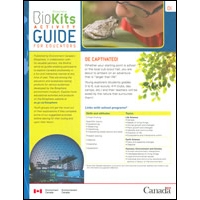
The Biosphere BioKit Activity Guide for Educators is an environmental education resource designed to help students explore Canada’s biodiversity throughout the year. Through interactive outdoor and classroom activities, students investigate local ecosystems, examine relationships among species, and develop an understanding of the threats facing biodiversity. The guide promotes experiential learning by encouraging observation, inquiry, and reflection, while fostering a sense of environmental stewardship and responsibility for protecting natural spaces in their own communities.
Through interactive activities such as the “Web of Life” game, outdoor BioKit field investigations, and a pollinator-focused food activity, students observe local environments, identify species, and examine how human actions impact ecosystems. Through hands-on, outdoor learning experiences, students engage in citizen science practices such as birdwatching, animal tracking, and sensory observation using their five senses. The resource encourages reflection, discussion, and stewardship by guiding students to consider practical actions they can take to protect biodiversity in their communities.
General Assessment
Recommendation of how and where to use it
Supports curriculum outcomes for grades three to six related to habitats, ecosystems and biodiversity. The activities encourage students to observe and appreciate the diversity of life in their local environment, explore how species interacts within habitats, and reflect on human impacts on ecosystems.
The guide also provides practical tips for planning outdoor excursions, using observation tools effectively, and facilitating meaningful discussions that promote environmental stewardship and action. Overall, it serves as an experiential, inquiry-based resource that guides students to construct their own understanding through direct experience in nature.
Relevant Curriculum Units
The following tool will allow you to explore the relevant curriculum matches for this resource. To start, select a province listed below.
- Step 1Select a province
- Alberta
- Step 2Select a grade level
- Grade 3
- Step 3Select a subject
- Science
- Step 4Relevant matches
- Living Systems: Understandings of the living world, Earth, and space are deepened through investigating natural systems and their interactions
- Grade 4
- Step 3Select a subject
- Science
- Step 4Relevant matches
- Earth Systems: Understandings of the living world, Earth, and space are deepened through investigating natural systems and their interactions.
- Grade 6
- Step 3Select a subject
- Science
- Step 4Relevant matches
- Living Systems: Understandings of the living world, Earth, and space are deepened through investigating natural systems and their interactions
- British Columbia
- Step 2Select a grade level
- Grade 3
- Step 3Select a subject
- Science
- Step 4Relevant matches
- Science 3: Living things are diverse, can be grouped, and interact in their ecosystems
- Grade 4
- Step 3Select a subject
- Science
- Step 4Relevant matches
- Science 4: All living things sense and respond to their environment
- Manitoba
- New Brunswick
- Newfoundland & Labrador
- Step 2Select a grade level
- Grade 3
- Step 3Select a subject
- Science
- Step 4Relevant matches
- Plant Growth & Changes
- Social Studies
- Step 4Relevant matches
- Citizenship
- Grade 4
- Step 3Select a subject
- Science
- Step 4Relevant matches
- Habitats and Communities
- Grade 5
- Step 3Select a subject
- Social Studies
- Step 4Relevant matches
- Societies: Environment
- Grade 6
- Step 3Select a subject
- Science
- Step 4Relevant matches
- Diversity of Life
- Social Studies
- Step 4Relevant matches
- What Influences Culture?
- Northwest Territories
- Step 2Select a grade level
- Grade 3
- Step 3Select a subject
- Science
- Step 4Relevant matches
- Science 3:living things are diverse, can be grouped, and interact in their ecosystems
- Grade 4
- Step 3Select a subject
- Science
- Step 4Relevant matches
- Science 4: All living things sense and respond to their environment
- Nova Scotia
- Step 2Select a grade level
- Grade 3
- Step 3Select a subject
- Social Studies
- Step 4Relevant matches
- Social Studies 3: Citizenship
- Grade 4
- Step 3Select a subject
- Grade 5
- Step 3Select a subject
- Grade 6
- Step 3Select a subject
- Social Studies
- Step 4Relevant matches
- Social Studies 6: Environment and Culture
- Nunavut
- Step 2Select a grade level
- Grade 3
- Step 3Select a subject
- Science
- Step 4Relevant matches
- Life Systems: Growth and Changes in Plants
- Social Studies
- Step 4Relevant matches
- Connecting With the World: Citizenship
- Grade 4
- Step 3Select a subject
- Social Studies
- Step 4Relevant matches
- Provinces and Territories: Our Places, Stories, and Traditions: The Land: Place & People
- Grade 5
- Step 3Select a subject
- Grade 6
- Step 3Select a subject
- Ontario
- Step 2Select a grade level
- Grade 3
- Step 3Select a subject
- Science & Technology
- Step 4Relevant matches
- Life Systems: Growth & Changes in Plants
- Social Studies
- Step 4Relevant matches
- People and Environments: Living and Working in Ontario
- Grade 4
- Step 3Select a subject
- Science & Technology
- Step 4Relevant matches
- Life Systems: Habitats and Communities
- Grade 6
- Step 3Select a subject
- Science & Technology
- Step 4Relevant matches
- Life Systems: Biodiversity
- Prince Edward Island
- Step 2Select a grade level
- Grade 3
- Step 3Select a subject
- Science
- Step 4Relevant matches
- Plant Growth & Changes
- Social Studies
- Step 4Relevant matches
- Provincial Identity: Citizenship
- Grade 4
- Step 3Select a subject
- Science
- Step 4Relevant matches
- Habitats
- Grade 6
- Step 3Select a subject
- Science
- Step 4Relevant matches
- Diversity of Life
- Quebec
- Step 2Select a grade level
- Grade 3
- Step 3Select a subject
- Science & Technology
- Step 4Relevant matches
- Living Things
- Grade 4
- Step 3Select a subject
- Science & Technology
- Step 4Relevant matches
- Living Things
- Grade 5
- Step 3Select a subject
- Science & Technology
- Step 4Relevant matches
- Living Things
- Grade 6
- Step 3Select a subject
- Science & Technology
- Step 4Relevant matches
- Living Things
- Saskatchewan
- Step 2Select a grade level
- Grade 3
- Step 3Select a subject
- Science
- Step 4Relevant matches
- Plant Growth and Changes
- Social Studies
- Step 4Relevant matches
- Community Comparisons: Resources and Welath
- Grade 4
- Step 3Select a subject
- Science
- Step 4Relevant matches
- Habitats and Communities
- Grade 5
- Step 3Select a subject
- Social Studies
- Step 4Relevant matches
- Canada: Resources and Wealth
- Grade 6
- Step 3Select a subject
- Science
- Step 4Relevant matches
- Science 6: Life Science: Diversity of Living Things
- Yukon Territory
- Step 2Select a grade level
- Grade 3
- Step 3Select a subject
- Science
- Step 4Relevant matches
- Science 3: Living things are diverse, can be grouped, and interact in their ecosystems
- Grade 4
- Step 3Select a subject
- Science
- Step 4Relevant matches
- Science 4: All living things sense and respond to their environment
Themes Addressed
Citizenship (1)
- Community-Building and Participation
Ecosystems (4)
- Appreciating the Natural World
- Biodiversity
- Habitat Loss
- Interdependence