- Home
- Tutorial
- Resource Guides
- Focus Areas
- LSF Programs
-
Professional
Development - Review Process
-
A project of LSF

Search for Resources
Description
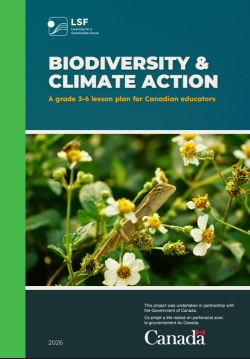
This lesson engages students in understanding biodiversity and climate action by exploring how living things are interconnected within ecosystems and why this diversity is essential for environmental health. Through inquiry-based and experiential learning, students investigate how climate change and other environmental changes disrupt habitats, impact species survival, and reduce ecosystem stability. Activities such as the Habitat Game and the Canadian Ecosystems Food Web task allow students to actively explore what organisms need to survive and how species depend on one another. The lesson also incorporates Indigenous perspectives by highlighting the importance of respectful relationships with the land and recognizing traditional ecological knowledge as a valuable way of understanding and caring for ecosystems. It also encourages students to reflect on human impacts and consider both individual and collective actions to protect biodiversity, fostering a sense of environmental responsibility.
Students will:
- develop a clear understanding of the concepts of habitat, ecosystems and biodiversity
- examine how positive and negative environmental changes affect species and habitat
- explore what species need to survive by collecting resources and responding to environmental challenges in a movement based activity
- explore different species and the important role they play in their respective ecosystems
- identify practical actions individuals and communities can take to help protect and restore biodiversity
- reflect on how today's actions can impact people and the land seven generations into the future
This lesson connects to the United Nations’ Sustainable Development Goals by promoting environmental stewardship and helping students understand their role in protecting ecosystems, particularly aligning with SDG 13 (Climate Action) and SDG 15 (Life on Land).
General Assessment
Strengths
- Strong focus on biodiversity, ecosystems, and climate change, helping students understand real-world environmental issues
- Comprehensive and age-appropriate exploration of biodiversity
- Engaging, hands-on activities that promote active learning
- Encourages practical action, supporting environmental stewardship and active citizenship
- Well organized and easy to use, with clear learning outcomes, materials and preparation steps
- Includes a range of assessment options
- Indigenous perspectives are woven into the the lesson plans
- Provides links to additional educator resources to extend the learning
Weaknesses
- No suggested modifications for students needing additional support
- Include an action based learning experience as part of the core activities
Relevant Curriculum Units
The following tool will allow you to explore the relevant curriculum matches for this resource. To start, select a province listed below.
- Step 1Select a province
- Alberta
- Step 2Select a grade level
- Grade 3
- Grade 4
- Grade 5
- Step 3Select a subject
- Arts
- Step 4Relevant matches
- Visual Arts
- Social Studies
- Step 4Relevant matches
- Citizenship: Understanding local, national, and global issues empowers individual and collective action toward an inclusive society
- Grade 6
- Step 3Select a subject
- Science
- Step 4Relevant matches
- Earth Systems: Understandings of the living world, Earth, and space are deepened through investigating natural systems and their interactions.
- Living Systems: Understandings of the living world, Earth, and space are deepened through investigating natural systems and their interactions
- Visual Art
- Step 4Relevant matches
- Visual Arts
- British Columbia
- Step 2Select a grade level
- Grade 3
- Step 3Select a subject
- Arts
- Step 4Relevant matches
- Arts Education: Creative experiences involve an interplay between exploration, inquiry, and purposeful choice.
- Science
- Step 4Relevant matches
- Science 3: Living things are diverse, can be grouped, and interact in their ecosystems
- Social Studies
- Step 4Relevant matches
- Global Indigenous Peoples:Indigenous societies throughout the world value the well-being of the self, the land, spirits, and ancestors
- Grade 4
- Grade 5
- Step 3Select a subject
- Arts
- Step 4Relevant matches
- Arts Education: Engaging in creative expression and experiences expands people’s sense of identity and belonging.
- Grade 6
- Step 3Select a subject
- Arts
- Step 4Relevant matches
- Arts Education: Artistic expressions differ across time and place.
- Manitoba
- New Brunswick
- Step 2Select a grade level
- Grade 3
- Step 3Select a subject
- Science
- Step 4Relevant matches
- Our Local Environment : Learning and Living Sustainably
- Visual Art
- Step 4Relevant matches
- Create
- Grade 4
- Step 3Select a subject
- Arts
- Step 4Relevant matches
- Arts General: Creating, Making, and Presenting
- Science
- Step 4Relevant matches
- Properties and Uses of Earth Materials: Learning and Living Sustainably
- Visual Art
- Step 4Relevant matches
- Create
- Grade 5
- Step 3Select a subject
- Arts
- Step 4Relevant matches
- Arts General: Creating, Making, and Presenting
- Visual Art
- Step 4Relevant matches
- Create
- Grade 6
- Step 3Select a subject
- Visual Art
- Step 4Relevant matches
- Create
- Newfoundland & Labrador
- Step 2Select a grade level
- Grade 3
- Step 3Select a subject
- Arts
- Step 4Relevant matches
- Arts: Creating, Making, and Presenting
- Grade 4
- Step 3Select a subject
- Arts
- Step 4Relevant matches
- Art: Creating, Making, and Presenting
- Science
- Step 4Relevant matches
- Habitats and Communities
- Social Studies
- Step 4Relevant matches
- Exploring Our World
- Grade 5
- Step 3Select a subject
- Arts
- Step 4Relevant matches
- Arts: Creating, Making, and Presenting
- Grade 6
- Step 3Select a subject
- Science
- Step 4Relevant matches
- Diversity of Life
- Visual Art
- Step 4Relevant matches
- Art: Creating, Making, and Presenting
- Northwest Territories
- Step 2Select a grade level
- Grade 3
- Step 3Select a subject
- Arts
- Step 4Relevant matches
- Arts Education: Creative experiences involve an interplay between exploration, inquiry, and purposeful choice.
- Science
- Step 4Relevant matches
- Science 3:living things are diverse, can be grouped, and interact in their ecosystems
- Social Studies
- Step 4Relevant matches
- Global Indigenous Peoples: Indigenous societies throughout the world value the well-being of the self, the land, spirits, and ancestors
- Grade 4
- Grade 5
- Step 3Select a subject
- Arts
- Step 4Relevant matches
- Arts Education: Dance, drama, music and visual arts are each unique languages for creating and communicating.
- Grade 6
- Step 3Select a subject
- Arts
- Step 4Relevant matches
- Arts Education: Artistic expressions differ across time and place.
- Nova Scotia
- Step 2Select a grade level
- Grade 3
- Step 3Select a subject
- Visual Art
- Step 4Relevant matches
- Visual Arts 3:Create
- Grade 4
- Step 3Select a subject
- Science
- Step 4Relevant matches
- Science 4: Habitats
- Social Studies
- Step 4Relevant matches
- Social Studies 4: Physical Environment
- Visual Art
- Step 4Relevant matches
- Visual Arts 4: Create
- Grade 5
- Step 3Select a subject
- Visual Art
- Step 4Relevant matches
- Visual Arts 5: Create
- Grade 6
- Step 3Select a subject
- Science
- Step 4Relevant matches
- Science 6: Diversity of Life
- Social Studies
- Step 4Relevant matches
- Social Studies 6: World Issues
- Visual Art
- Step 4Relevant matches
- Visual Arts 6: Create
- Nunavut
- Step 2Select a grade level
- Grade 3
- Step 3Select a subject
- Arts
- Step 4Relevant matches
- Arts Education 3 : Creative/Productive
- Social Studies
- Step 4Relevant matches
- Connecting With the World: The Land: Place & People
- Grade 4
- Step 3Select a subject
- Arts
- Step 4Relevant matches
- Arts Education 4: Creative/Productive
- Science
- Step 4Relevant matches
- Life Systems: Habitats & Communities
- Social Studies
- Step 4Relevant matches
- Provinces and Territories: Our Places, Stories, and Traditions: The Land: Place & People
- Grade 5
- Step 3Select a subject
- Arts
- Step 4Relevant matches
- Arts Education 5: Creative/Productive
- Grade 6
- Ontario
- Step 2Select a grade level
- Grade 3
- Step 3Select a subject
- Arts
- Step 4Relevant matches
- Arts: Visual Arts
- Grade 4
- Step 3Select a subject
- Arts
- Step 4Relevant matches
- Arts: Visual Arts
- Science & Technology
- Step 4Relevant matches
- Life Systems: Habitats and Communities
- Grade 5
- Step 3Select a subject
- Arts
- Step 4Relevant matches
- Arts: Visual Arts
- Grade 6
- Step 3Select a subject
- Arts
- Step 4Relevant matches
- Arts: Visual Arts
- Science & Technology
- Step 4Relevant matches
- Life Systems: Biodiversity
- Prince Edward Island
- Step 2Select a grade level
- Grade 3
- Step 3Select a subject
- Arts
- Step 4Relevant matches
- Visual Arts 1: Creating and Presenting
- Grade 4
- Step 3Select a subject
- Science
- Step 4Relevant matches
- Habitats
- Social Studies
- Step 4Relevant matches
- Exploring Our World
- Visual Art
- Step 4Relevant matches
- Visual Arts: Creating and Presenting
- Grade 5
- Step 3Select a subject
- Visual Art
- Step 4Relevant matches
- Visual Arts: Creating and Presenting
- Grade 6
- Step 3Select a subject
- Science
- Step 4Relevant matches
- Diversity of Life
- Social Studies
- Step 4Relevant matches
- World Issues
- Visual Art
- Step 4Relevant matches
- Visual Arts: Creating and Presenting
- Quebec
- Step 2Select a grade level
- Grade 3
- Step 3Select a subject
- Arts
- Step 4Relevant matches
- Arts: Visual Arts: To produce media works in the visual arts
- Science & Technology
- Step 4Relevant matches
- Living Things
- Grade 4
- Step 3Select a subject
- Arts
- Step 4Relevant matches
- Arts: Visual Arts: To produce media works in the visual arts
- Science & Technology
- Step 4Relevant matches
- Living Things
- Grade 5
- Step 3Select a subject
- Arts
- Step 4Relevant matches
- Arts: Visual Arts: To produce media works in the visual arts
- Science & Technology
- Step 4Relevant matches
- Living Things
- Grade 6
- Step 3Select a subject
- Arts
- Step 4Relevant matches
- Arts: Visual Arts: To produce media works in the visual arts
- Science & Technology
- Step 4Relevant matches
- Living Things
- Saskatchewan
- Step 2Select a grade level
- Grade 3
- Step 3Select a subject
- Arts
- Step 4Relevant matches
- Arts Education 3 : Creative/Productive
- Grade 4
- Grade 5
- Step 3Select a subject
- Arts
- Step 4Relevant matches
- Arts Education 5: Creative/Productive
- Social Studies
- Step 4Relevant matches
- Canada: Resources and Wealth
- Grade 6
- Yukon Territory
- Step 2Select a grade level
- Grade 3
- Step 3Select a subject
- Arts
- Step 4Relevant matches
- Arts Education: Creative experiences involve an interplay between exploration, inquiry, and purposeful choice.
- Science
- Step 4Relevant matches
- Science 3: Living things are diverse, can be grouped, and interact in their ecosystems
- Social Studies
- Step 4Relevant matches
- Global Indigenous Peoples:Indigenous societies throughout the world value the well-being of the self, the land, spirits, and ancestors
- Grade 4
- Grade 5
- Step 3Select a subject
- Arts
- Step 4Relevant matches
- Arts Education: Dance, drama, music and visual arts are each unique languages for creating and communicating.
- Grade 6
- Step 3Select a subject
- Arts
- Step 4Relevant matches
- Arts Education: Artistic expressions differ across time and place.
Themes Addressed
Air, Atmosphere & Climate (1)
- Climate Change
Ecosystems (4)
- Appreciating the Natural World
- Biodiversity
- Habitat Loss
- Interdependence
Indigenous Knowledge (1)
- TEK -- Traditional Ecological Knowledge
Land Use & Natural Resources (1)
- Habitat Restoration
Sustainability Education Principles
| Principle | Rating | Explanation |
|---|---|---|
| Consideration of Alternative Perspectives | Very Good | This lesson integrates Indigenous knowledge systems with Western science by valuing Indigenous perspectives rooted in relationships with the land and living things, helping deepen student's understanding of ecosystems, biodiversity and climate change. |
Consideration of Alternative Perspectives:
| ||
| Multiple Dimensions of Problems & Solutions | Satisfactory | The lesson provides a strong focus on environmental issues and incorporates elements of the social dimension through students engagement and action. Teachers would need to develop economic considerations in an age-appropriate manner. |
| Multiple Dimensions of Problems & Solutions: Effectively addresses the environmental, economic and social dimensions of the issue(s) being explored.
| ||
| Respects Complexity | Very Good | The resource highlights the interconnectedness of ecosystems, climate change, and human actions, while presenting these relationships in a simple, age-appropriate manner. |
| Respects Complexity: The complexity of the problems/issues being discussed is respected. | ||
| Acting on Learning | Good | The Action Planning for Protecting Biodiversity section of the resource invites students to explore their responsibility to care for the land and living things by identifying an issue affecting biodiversity, proposing a solution, and suggesting an action people can take. The extent to which these proposed actions are implemented is left to the discretion of the teacher. |
| Acting on Learning: Learning moves from understanding issues to working towards positive change — in personal lifestyle, in school, in the community, or for the planet
| ||
| Values Education | Very Good | The Outdoor Biodiversity Field Journal provides opportunities for reflection through guiding questions, while the Graffiti Wall activity enables students to share their ideas and thoughts about biodiversity. Students also present their learning to the school community. |
| Values Education: Students are explicitly provided with opportunities to identify, clarify and express their own beliefs/values. | ||
| Empathy & Respect for Humans | Good | The resource fosters empathy and respect by incorporating Indigenous perspectives that emphasize respectful relationships with the land and living things. |
| Empathy & Respect for Humans: Empathy and respect are fostered for diverse groups of humans (including different genders, ethnic groups, sexual preferences, etc.). | ||
| Personal Affinity with Earth | Very Good | The resource encourages an affinity with the natural world by fostering awareness, appreciation, and a sense of responsibility for biodiversity and the environment. |
| Personal Affinity with Earth: Encourages a personal affinity with -the natural world.
| ||
| Locally-Focused Learning | Very Good | Students work in pairs or small groups to redesign their school as a “green school” by proposing climate-friendly changes, then present their ideas to the school community. The Outdoor Field Journal invites students to explore a nearby outdoor space such as a schoolyard, park, or natural area. |
| Locally-Focused Learning: Includes learning experiences that take advantage of issues/elements within the local community.
| ||
| Past, Present & Future | Good | The resource promotes an understanding of the present and encourages a positive vision for a healthier, more environmentally responsible future. It incorporates Indigenous ways of knowing through its emphasis on relationships with the land and stewardship. |
| Past, Present & Future: Promotes an understanding of the past, a sense of the present, and a positive vision for the future. | ||
Pedagogical Approaches
| Principle | Rating | Explanation |
|---|---|---|
| Open-Ended Instruction | Very Good | The resource includes some open-ended instruction by allowing students to generate their own solutions and actions within guided tasks. The lesson structure encourages students to discuss biodiversity and express their personal understanding of the concept through a variety of activities. |
| Open-Ended Instruction
: Lessons are structured so that multiple/complex answers are possible; students are not steered toward one 'right' answer. | ||
| Integrated Learning | Very Good | The resource primarily addresses science, while also connecting to social studies, language arts, and visual arts through discussion, communication, and creative tasks. |
| Integrated Learning: Learning brings together content and skills from more than one subject area
| ||
| Inquiry Learning | Good | The resource engages students in exploring biodiversity, asking questions, and developing their own solutions and understanding through guided investigation and discussion. |
| Inquiry Learning: Learning is directed by questions, problems, or challenges that students work to address.
| ||
| Differentiated Instruction | Good | The resource supports some differentiation instruction through multiple ways for students to demonstrate understanding, but it relies on teacher adaptation rather than built-in differentiated strategies. |
| Differentiated Instruction: Activities address a range of student learning styles, abilities and readiness.
| ||
| Experiential Learning | Good | The resource includes some experiential learning through activities such as an outdoor biodiversity field journal, where students observe and record living things in their environment, as well as classroom tasks like action planning and designing a green school. |
| Experiential Learning: Authentic learning experiences are provided
| ||
| Cooperative Learning | Satisfactory | Most activities are in a group setting, where students work with a partner or group. |
| Cooperative Learning: Group and cooperative learning strategies are a priority.
| ||
| Assessment & Evaluation | Very Good | The resource uses primarily formative assessment strategies that are integrated throughout the activities. These include teacher observation of student participation and the outdoor biodiversity field journal to review students observations and reflections. Additional strategies such as the graffiti wall and class discussions allow students to share their ideas and demonstrate understanding. The Design a Green School activity enables students to apply their learning in a real world context. |
| Assessment & Evaluation: Tools are provided that help students and teachers to capture formative and summative information about students' learning and performance. These tools may include reflection questions, checklists, rubrics, etc. | ||
| Peer Teaching | Good | Some activities ask students to communicate their thinking or findings to the class or school community. |
| Peer Teaching: Provides opportunities for students to actively present their knowledge and skills to peers and/or act as teachers and mentors.
| ||
| Case Studies | Poor/Not considered | Not considered in this resource |
| Case Studies: Relevant case studies are included. Case studies are thorough descriptions of real events from real situations that students use to explore concepts in an authentic context. | ||
| Locus of Control | Good | The resource provides some opportunities for student choice, particularly in selecting ideas, solutions, and ways to express their learning, such as through discussions, drawings, writing, or presentations. There is one suggested extension activity if the teacher choose to extend the learning. |
| Locus of Control: Meaningful opportunities are provided for students to choose elements of program content, the medium in which they wish to work, and/or to go deeper into a chosen issue. | ||