- Home
- Tutorial
- Resource Guides
- Focus Areas
- LSF Programs
-
Professional
Development - Review Process
-
A project of LSF

Search for Resources
Description
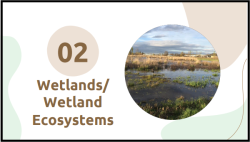
This lesson explores wetland ecosystems found in Alberta, including ponds, sloughs, marshes, bogs and fens. It introduces Indigenous worldviews, focusing on the relationships between living and non-living things in a wetland environment. Through this learning, students recognize how changes to one part of the environment can affect the whole ecosystem. They experience Indigenous perspectives about nature and wetlands alongside Western scientific viewpoints.
Students will:
- participate in an outdoor sharing circle and reflect on quotes related to the land and Indigenous knowledge
- engage in a Think-Pair-Share using guiding questions about what wetlands are, what lives there, and why they matter
- watch the Tea of Life and My Rubber Boots videos to compare Indigenous and Western worldviews on nature and to support students in making personal connections to wetland ecology and perspectives
- take part in a group discussion comparing Indigenous teachings with scientific viewpoints
- reflect on differences and on what they learned about wetlands
The resource includes slides, videos, handouts, and two assessment activities, along with background information to support teachers. The lesson respectfully weaves in Indigenous perspectives by exploring how Indigenous knowledge connects people to the land and ecosystems especially wetlands and contrasts this with Western scientific views. Although the lesson highlights wetland ecosystems in Alberta, the concepts and activities are easily adaptable for classrooms across Canada.
General Assessment
Strengths
- The lesson is easy to implement, provides all necessary materials, and includes background information to support teachers
- Introduces students to Indigenous worldviews, fostering respect for multiple perspectives and cultural understanding
- Supports multiple learning styles through discussion, observation, writing
- Encourages students to protect wetlands, connecting classroom learning to personal health and Canada’s future
- The sharing circle takes place outdoors and can be extended through a field trip, promoting hands-on, place-based learning
Weaknesses
- The lesson is structured and does not provide many options for students to choose how they engage with the content
- While inquiry is present, there may be limited opportunities for students to design their own investigations or research.
- Originally designed for Alberta; while adaptable, teachers in other provinces may need to adjust it to align fully with local outcomes.
- Needs to provide a field trip to a wetland to support and enhance the learning
Recommendation of how and where to use it
This resource is suitable for Grades 4–6 and supports Social Studies and Science outcomes related to Indigenous knowledge, ecosystems, and wetland conservation. It helps students understand the value of wetlands through both Indigenous and scientific perspectives and is well suited for World Wetlands Day or as an introduction before a field trip.
Relevant Curriculum Units
The following tool will allow you to explore the relevant curriculum matches for this resource. To start, select a province listed below.
- Step 1Select a province
- Alberta
- British Columbia
- Manitoba
- Step 2Select a grade level
- Grade 4
- Step 3Select a subject
- Indigenous Languages and Cultures
- Step 4Relevant matches
- Cultural and Linguistic Diversity: Other Cultures: Connections and Influences
- Grade 5
- Step 3Select a subject
- Indigenous Languages and Cultures
- Step 4Relevant matches
- Cultural and Linguistic Diversity: Specific Aboriginal Culture
- Grade 6
- Step 3Select a subject
- Indigenous Languages and Cultures
- Step 4Relevant matches
- Cultural and Linguistic Diversity: Specific Aboriginal Culture
- Newfoundland & Labrador
- Northwest Territories
- Step 2Select a grade level
- Grade 4
- Step 3Select a subject
- Indigenous Languages and Cultures
- Step 4Relevant matches
- Dene Kede: The Land
- Science
- Step 4Relevant matches
- Science 4: All living things sense and respond to their environment
- Grade 5
- Step 3Select a subject
- Indigenous Languages and Cultures
- Step 4Relevant matches
- Dene Kede: The Land
- Grade 6
- Step 3Select a subject
- Indigenous Languages and Cultures
- Step 4Relevant matches
- Dene Kede: The Land
- Nova Scotia
- Step 2Select a grade level
- Grade 4
- Step 3Select a subject
- Science
- Step 4Relevant matches
- Science 4: Habitats
- Social Studies
- Step 4Relevant matches
- Social Studies 4: Physical Environment
- Grade 6
- Step 3Select a subject
- Science
- Step 4Relevant matches
- Science 6: Diversity of Life
- Nunavut
- Step 2Select a grade level
- Grade 4
- Step 3Select a subject
- Indigenous Languages and Cultures
- Step 4Relevant matches
- Relationship to the Environment
- Science
- Step 4Relevant matches
- Life Systems: Habitats & Communities
- Social Studies
- Step 4Relevant matches
- Provinces and Territories: Our Places, Stories, and Traditions: The Land: Place & People
- Grade 6
- Step 3Select a subject
- Science
- Step 4Relevant matches
- Life Systems: Diversity of Living Things
- Ontario
- Step 2Select a grade level
- Grade 4
- Step 3Select a subject
- Science & Technology
- Step 4Relevant matches
- Life Systems: Habitats and Communities
- Grade 6
- Step 3Select a subject
- Science & Technology
- Step 4Relevant matches
- Life Systems: Biodiversity
- Prince Edward Island
- Step 2Select a grade level
- Grade 4
- Step 3Select a subject
- Science
- Step 4Relevant matches
- Habitats
- Social Studies
- Step 4Relevant matches
- Exploring Our World
- Grade 6
- Step 3Select a subject
- Science
- Step 4Relevant matches
- Diversity of Life
- Quebec
- Step 2Select a grade level
- Grade 4
- Step 3Select a subject
- Science & Technology
- Step 4Relevant matches
- Living Things
- Grade 5
- Step 3Select a subject
- Science & Technology
- Step 4Relevant matches
- Living Things
- Grade 6
- Step 3Select a subject
- Science & Technology
- Step 4Relevant matches
- Living Things
- Saskatchewan
- Yukon Territory
Themes Addressed
Ecosystems (4)
- Appreciating the Natural World
- Biodiversity
- Habitat Loss
- Interdependence
Water (1)
- Watershed Protection
Sustainability Education Principles
| Principle | Rating | Explanation |
|---|---|---|
| Consideration of Alternative Perspectives | Very Good | Students examine western and Indigenous worldviews on living and non-living things in wetlands ecosystems while recognizing that all plants and animals have an important role in a wetlands community as they interact with one another. |
Consideration of Alternative Perspectives:
| ||
| Multiple Dimensions of Problems & Solutions | Good | This lesson addresses wetlands' social, environmental, and economic issues by exploring Indigenous knowledge, ecosystem conservation and sustainable human use. |
| Multiple Dimensions of Problems & Solutions: Effectively addresses the environmental, economic and social dimensions of the issue(s) being explored.
| ||
| Respects Complexity | Good | The lesson plan emphasizes that sharing Indigenous worldviews and perspectives, is not meant to contradict other views, all perspectives should be respected and valued. |
| Respects Complexity: The complexity of the problems/issues being discussed is respected. | ||
| Acting on Learning | Satisfactory | This is more of an lesson to create awareness about the importance of wetland ecosystems. |
| Acting on Learning: Learning moves from understanding issues to working towards positive change — in personal lifestyle, in school, in the community, or for the planet
| ||
| Values Education | Satisfactory | During discussions, students are encouraged to express their own beliefs/values towards wetlands. |
| Values Education: Students are explicitly provided with opportunities to identify, clarify and express their own beliefs/values. | ||
| Empathy & Respect for Humans | Good | This resource helps to develop an appreciation of Indigenous beliefs and their connectedness to the wetlands. |
| Empathy & Respect for Humans: Empathy and respect are fostered for diverse groups of humans (including different genders, ethnic groups, sexual preferences, etc.). | ||
| Personal Affinity with Earth | Good | Some of the activities could take place in or outside the classroom. It is recommended this lesson be taught before a field trip to a wetland. |
| Personal Affinity with Earth: Encourages a personal affinity with -the natural world.
| ||
| Locally-Focused Learning | Good | The activities in the resource help the students better understand the value of wetland resources and the importance of preserving them. |
| Locally-Focused Learning: Includes learning experiences that take advantage of issues/elements within the local community.
| ||
| Past, Present & Future | Good | The resource encourages students to protect wetlands, recognizing the essential role these rich and diverse ecosystems play in personal health and Canada’s future. |
| Past, Present & Future: Promotes an understanding of the past, a sense of the present, and a positive vision for the future. | ||
Pedagogical Approaches
| Principle | Rating | Explanation |
|---|---|---|
| Open-Ended Instruction | Very Good | This lesson provides opportunities for open-ended instruction by allowing students to explore wetlands through multiple perspectives and ways of thinking. Students can ask their own questions, share ideas, and draw conclusions based on observations, discussions, and Indigenous and scientific viewpoints. The lesson encourages dialogue rather than fixed answers, supporting student choice, critical thinking, and respectful discussion of different perspectives. |
| Open-Ended Instruction
: Lessons are structured so that multiple/complex answers are possible; students are not steered toward one 'right' answer. | ||
| Integrated Learning | Good |
|
| Integrated Learning: Learning brings together content and skills from more than one subject area
| ||
| Inquiry Learning | Good | The lesson includes an inquiry learning component by encouraging students to ask questions about wetland ecosystems, explore relationships between living and non-living elements, and investigate issues related to wetland protection. Students gather information through observation, discussion, and reflection. |
| Inquiry Learning: Learning is directed by questions, problems, or challenges that students work to address.
| ||
| Differentiated Instruction | Good | Students participate in a sharing circle, think pair share and viewing activities. The open-ended nature of the lesson also allows teachers to adjust questions, supports and extensions to meet diverse learning needs. |
| Differentiated Instruction: Activities address a range of student learning styles, abilities and readiness.
| ||
| Experiential Learning | Good | The sharing circle is conducted outdoors, and the lesson may be extended through a field trip to a local wetland. |
| Experiential Learning: Authentic learning experiences are provided
| ||
| Cooperative Learning | Satisfactory | Students work in partners so they can discuss their |
| Cooperative Learning: Group and cooperative learning strategies are a priority.
| ||
| Assessment & Evaluation | Good | Students will assess their learning by recognizing common plants, animals, and insects found in wetlands through the interactive Wetland Odyssey quiz. |
| Assessment & Evaluation: Tools are provided that help students and teachers to capture formative and summative information about students' learning and performance. These tools may include reflection questions, checklists, rubrics, etc. | ||
| Peer Teaching | Poor/Not considered | Not considered in this resource. |
| Peer Teaching: Provides opportunities for students to actively present their knowledge and skills to peers and/or act as teachers and mentors.
| ||
| Case Studies | Good | The videos featuring Elder Roy and Dr. Suzanne Bayley present real-world wetland case studies that highlight ecological importance and support student analysis, discussion, and reflection. |
| Case Studies: Relevant case studies are included. Case studies are thorough descriptions of real events from real situations that students use to explore concepts in an authentic context. | ||
| Locus of Control | Poor/Not considered | The lesson is not structured to provide a wide range of options or choices to enhance the learning. |
| Locus of Control: Meaningful opportunities are provided for students to choose elements of program content, the medium in which they wish to work, and/or to go deeper into a chosen issue. | ||