- Home
- Tutorial
- Resource Guides
- Focus Areas
- LSF Programs
-
Professional
Development - Review Process
-
A project of LSF

Search for Resources
Description
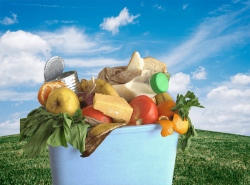
Food waste is a growing environmental and social issue that affects natural resources, climate change, and food security. In this lesson, students explore where food comes from, examine how food moves through the food system from farm to table, and investigate the environmental, economic, and social impacts of food waste. Students also consider practical solutions to reduce food waste and lessen its impact on people and the planet.
Students will:
- explore the journey food takes from natural resources and farms to consumers
- investigate how food waste occurs at different stages of the food system
- examine the environmental impacts of food waste, including greenhouse gas emissions, water use, habitat loss, and biodiversity
- analyze the social and economic consequences of food waste
- calculate and evaluate their own food footprint using real-world data
- identify strategies individuals, schools, and communities can use to reduce food waste
- participate in discussions, simulations, and inquiry-based activities to deepen their understanding of food systems and sustainability
- consider how reducing food waste can support both environmental sustainability and food security.
General Assessment
What skills does this resource explicitly teach?
Students practice analyzing food systems, evaluating the environmental impacts of food waste, calculating their ecological footprint, and identifying strategies to reduce waste and promote sustainability.
Strengths
- The topic is current and relevant, helping students understand the environmental and social impacts of food waste.
- Students make real-world connections between food production, natural resources, food waste, and sustainability.
- Interactive activities, simulations, videos, and discussions help keep students engaged.
- The lesson encourages critical thinking by having students examine how food waste affects the environment, economy, and society.
- Students calculate their own food footprint, making the learning personal and meaningful.
- Practical solutions are explored, helping students identify actions they can take to reduce food waste.
- A variety of resources and teacher supports are provided, including slide decks, flowcharts, videos, discussion questions, and hands-on activities.
- The lesson is well organized and easy to use, with clear learning outcomes, background information, materials lists, and step-by-step instructions.
Weaknesses
- The lesson is largely teacher-directed, with limited opportunities for students to choose topics, inquiry questions, or ways to demonstrate their learning.
- While students explore solutions to food waste, there are few opportunities for them to take meaningful action beyond the classroom.
- Few accommodations or differentiation strategies are provided for students with diverse learning needs.
- Assessment tools are limited, with no clear rubrics, self-assessment opportunities, or summative assessment guides.
Recommendation of how and where to use it
This resource would be excellent to included in Environmental Science, Geography, Sustainability, or Food Studies courses when exploring food systems, climate change, waste management, or sustainable consumption. It would be especially useful as part of a unit on sustainability because it helps students make connections between everyday choices, food waste, and environmental impacts while encouraging discussion about practical solutions.
Relevant Curriculum Units
The following tool will allow you to explore the relevant curriculum matches for this resource. To start, select a province listed below.
- Step 1Select a province
- Alberta
- Step 2Select a grade level
- Grade 10
- Step 3Select a subject
- Science
- Step 4Relevant matches
- Science 10-4 (Knowledge and Employability Science): Investigating Matter and Energy in Environmental Systems
- Science 10: Energy Flow in Global Systems
- Science 14:Investigating Matter and Energy in the Environment
- Technological Education
- Step 4Relevant matches
- AGR1010: Introduction to Agriculture
- Environmental Stewardship 1010: Introduction to Stewardship
- Grade 11
- Step 3Select a subject
- Biology
- Step 4Relevant matches
- Biology 20: Ecosystems and Population Change
- Biology 20:Energy and Matter Exchange in the Biosphere
- Science
- Step 4Relevant matches
- Science 20: Changes in Living Systems
- Science 20: The Changing Earth
- Technological Education
- Step 4Relevant matches
- AGR2010: Diversity in Agricultue
- Grade 12
- Step 3Select a subject
- Biology
- Step 4Relevant matches
- Biology 30: Population and Community Dynamics
- Geography
- Step 4Relevant matches
- World Geography 30: World Patterns of Humankind's Use of the Earth
- World Geography 30: World Patterns of Physical Elements
- Technological Education
- Step 4Relevant matches
- Agriculture - AGR 3100: Biotechnology
- Agriculture - AGR3030: Field Crops 2
- British Columbia
- Step 2Select a grade level
- Grade 9
- Step 3Select a subject
- Science
- Step 4Relevant matches
- Science 9: The biosphere, geosphere, hydrosphere, and atmosphere are interconnected, as matter cycles and energy flows through them.
- Grade 11
- Step 3Select a subject
- Environmental Science
- Step 4Relevant matches
- Environmental Science 11: Changing ecosystems are maintained by natural processes.
- Environmental Science 11: Complex roles and relationships contribute to diversity of ecosystems
- Environmental Science 11: Human practices affect the sustainability of ecosystems
- Environmental Science 11:Humans can play a role in stewardship and restoration of ecosystems
- Science
- Step 4Relevant matches
- Earth Science 11: The transfer of energy through the atmosphere creates weather and is affected by climate change
- Science for Citizenship 11: Scientific understanding enables humans to respond and adapt to changes locally and globally
- Grade 12
- Step 3Select a subject
- Environmental Science
- Step 4Relevant matches
- Environmental Science 12: Human actions affect the quality of water and its ability to sustain life.
- Environmental Science 12: Human activities cause changes in the global climate system
- Environmental Science 12: Living sustainably supports the well-being of self, community, and Earth.
- Environmental Science 12: Sustainable land use is essential to meet the needs of a growing population
- Science
- Step 4Relevant matches
- Specialized Science 12: Climate change impacts biodiversity and ecosystem health
- Social Studies
- Step 4Relevant matches
- Comparative Cultures 12: Geographic and environmental factors influenced the development of agriculture, trade, and increasingly complex cultures
- Manitoba
- Step 2Select a grade level
- Grade 6
- Step 3Select a subject
- Technological Education
- Step 4Relevant matches
- Human Ecology: Food and Nutrition - Citizenship and Sustainability
- Grade 7
- Step 3Select a subject
- Technological Education
- Step 4Relevant matches
- Human Ecology: Food and Nutrition - Citizenship and Sustainability
- Grade 8
- Step 3Select a subject
- Technological Education
- Step 4Relevant matches
- Human Ecology: Food and Nutrition - Citizenship and Sustainability
- Grade 9
- Step 3Select a subject
- Technological Education
- Step 4Relevant matches
- Human Ecology: Food and Nutrition - Citizenship and Sustainability
- Grade 10
- Step 3Select a subject
- Geography
- Step 4Relevant matches
- Geographic Issues of the 21 st Century: Food from the Land
- Geographic Issues of the 21st Century: Natural Resources
- Science
- Step 4Relevant matches
- Earth Science
- Technological Education
- Step 4Relevant matches
- Human Ecology: Food and Nutrition - Citizenship and Sustainability
- Grade 11
- Step 3Select a subject
- Technological Education
- Step 4Relevant matches
- Human Ecology: Food and Nutrition - Citizenship and Sustainability
- Grade 12
- Step 3Select a subject
- Biology
- Step 4Relevant matches
- Biology: Conservation of Biodiversity
- Biology: Evolutionary Theory and Biodiversity
- Geography
- Step 4Relevant matches
- World Geography: A Human Perspective - World Food Supply: Production and Distribution
- World Geography: A Human Perspective - World Geography Overview
- World Geography: A Human Perspective - World Population: Characteristics, Distribution, and Growth
- World Geography: A Human Perspective - World Resources, Energy, and Environment
- Social Studies
- Step 4Relevant matches
- Citizenship and Sustainability: Area of Inquiry: Consumerism
- Citizenship and Sustainability: Area of Inquiry: Environment
- Global Issues
- Global Issues
- Technological Education
- Step 4Relevant matches
- Human Ecology: Food and Nutrition - Citizenship and Sustainability
- New Brunswick
- Step 2Select a grade level
- Grade 9
- Step 3Select a subject
- Science
- Step 4Relevant matches
- Science 9 Ecosystem Dynamics: Learning and Living Sustainably
- Science 9 Ecosystem Dynamics: Scientific Literacy
- Grade 10
- Step 3Select a subject
- Science
- Step 4Relevant matches
- Learning and Living Sustainably (STSE)
- Science 10 Science for Sustainable Societies
- Science 10 Science for Sustainable Societies: Scientific Literacy
- Grade 11
- Step 3Select a subject
- Biology
- Step 4Relevant matches
- Biology 111/2: Study of Life
- Grade 12
- Step 3Select a subject
- Environmental Science
- Step 4Relevant matches
- Advanced Environmental Science 120: Earth Systems
- Advanced Environmental Science 120:Introduction to the human sphere
- Introduction to Environmental Science 120: An Overview of Environmental Science
- Introduction to Environmental Science 120: Investigating Environmental Issues
- Introduction to Environmental Science 120: Sustainable Development
- Geography
- Step 4Relevant matches
- Canadian Geography 120: Patterns and Systems in the Human and Natural World
- Newfoundland & Labrador
- Step 2Select a grade level
- Grade 9
- Step 3Select a subject
- Home Economics
- Step 4Relevant matches
- Home Economics Intermediate: Foods and Nutrition Module
- Grade 10
- Grade 11
- Step 3Select a subject
- Biology
- Step 4Relevant matches
- Biology 2201: Ecosystem Interactions and Population Dynamics
- Family Studies
- Step 4Relevant matches
- Nutrition 2101: Food Choices and Nutritional Needs
- Nutrition 2102: Food Selection, Preparation and Storage
- Science
- Step 4Relevant matches
- Science 2200: Ecosytems
- Science 2200: Weather Dynamics
- Grade 12
- Step 3Select a subject
- Biology
- Step 4Relevant matches
- Biology 3201: Evolution, Change and Biodiversity
- Environmental Science
- Step 4Relevant matches
- Environmental Science 3205: Introduction to Environmental Science
- Environmental Science 3205: Land Use & the Environment
- Environmental Science 3205: The Atmosphere and the Environment
- Environmental Science 3205: Water Use & the Environment
- Environmental Science 3205:Recreation & the Environment
- Family Studies
- Step 4Relevant matches
- Nutrition 3102: Food Nutrition & Health
- Nutrition 3102: Food Security
- Nutrition 3102: Food Technology & Production
- Geography
- Step 4Relevant matches
- World Geography 3200/3202: Land and Water Forms
- World Geography 3200/3202: Ecosystems
- World Geography 3200/3202: Primary Resource Activities
- World Geography 3200/3202: Secondary and Tertiary Activities
- World Geography 3200/3202: World Climate Patterns
- Social Studies
- Step 4Relevant matches
- Social Studies 3201/3202: Human-Environment Interaction
- Northwest Territories
- Step 2Select a grade level
- Grade 9
- Step 3Select a subject
- Science
- Step 4Relevant matches
- Science 9: The biosphere, geosphere, hydrosphere, and atmosphere are interconnected, as matter cycles and energy flows through them.
- Grade 11
- Step 3Select a subject
- Biology
- Step 4Relevant matches
- Biology 20: Ecosystems and Population Change
- Biology 20:Energy and Matter Exchange in the Biosphere
- Environmental Science
- Step 4Relevant matches
- Environmental Science 11: Changing ecosystems are maintained by natural processes.
- Environmental Science 11: Complex roles and relationships contribute to diversity of ecosystems
- Environmental Science 11: Human practices affect the sustainability of ecosystems
- Environmental Science 11:Humans can play a role in stewardship and restoration of ecosystems
- Science
- Step 4Relevant matches
- Earth Science 11: The transfer of energy through the atmosphere creates weather and is affected by climate change
- Grade 12
- Step 3Select a subject
- Biology
- Step 4Relevant matches
- Biology 30: Population and Community Dynamics
- Environmental Science
- Step 4Relevant matches
- Environmental Science 12: Human actions affect the quality of water and its ability to sustain life.
- Environmental Science 12: Human activities cause changes in the global climate system
- Environmental Science 12: Living sustainably supports the well-being of self, community, and Earth.
- Environmental Science 12: Sustainable land use is essential to meet the needs of a growing population
- Science
- Step 4Relevant matches
- Specialized Science 12: Climate change impacts biodiversity and ecosystem health
- Nova Scotia
- Step 2Select a grade level
- Grade 10
- Step 3Select a subject
- Family Studies
- Step 4Relevant matches
- Food Technology 10: Food industry Technology
- Food Technology 10: Issues Related to the Food Industry
- International Foods 10: An Introduction to Global Foods
- International Foods 10: Global Awareness
- Geography
- Step 4Relevant matches
- Geography 10: Atmospheric Environment
- Geography 10:Land Environment
- Science
- Step 4Relevant matches
- Science 10: Sustainability of Ecosystems
- Science 10: Weather Dynamics
- Grade 11
- Step 3Select a subject
- Biology
- Step 4Relevant matches
- Biology 11: Biodiversity
- Biology 11: Interactions among Living Things
- Career-Related Courses
- Step 4Relevant matches
- Agriculture 11: Beyond the Farm Gate
- Agriculture 11: Connections—Factors, Experiments, and Lives
- Agriculture 11: Foods
- Agriculture 11: Primary Production Systems
- Agriculture 11: Support Systems
- Social Studies
- Step 4Relevant matches
- Contemporary Canadian Studies 11: Environmental Justice
- Grade 12
- Step 3Select a subject
- Environmental Science
- Step 4Relevant matches
- AP Environmental Science: Aquatic and Terrestrial Pollution
- AP Environmental Science: Atmospheric Pollution
- AP Environmental Science: Earth Systems and Resources
- AP Environmental Science: Energy Consumption and Resources
- AP Environmental Science: Global Change
- AP Environmental Science: Land and Water
- AP Environmental Science: Populations
- AP Environmental Science: The Living World: Biodiversity
- AP Environmental Science: The Living World: Ecosystems
- Geography
- Step 4Relevant matches
- AP Human Geography: Agricultural and Rural Land - Use Patterns and Processes
- AP Human Geography: Cities and Urban Land - Use Patterns and Processes
- Global Geography: Planet Earth
- Home Economics
- Step 4Relevant matches
- Food Science 12: Food Constituents
- Food Science 12: Food Quality and Commodities
- Food Science12: Food Packaging
- Social Studies
- Step 4Relevant matches
- Global Sustainable Solutions: Security and Sustainability
- Global Sustainable Solutions: Susainable Communities
- Nunavut
- Step 2Select a grade level
- Grade 10
- Step 3Select a subject
- Science
- Step 4Relevant matches
- Experiential Science 10, Terrestial Systems: Climatology and Meteorology
- Experiential Science 10, Terrestial Systems: Ecology of the Land
- Experiential Science 10, Terrestial Systems: Resource Management and Population Dynamics
- Science 10-4 (Knowledge and Employability Science): Investigating Matter and Energy in Environmental Systems
- Science 10: Energy Flow in Global Systems
- Science 14: Investigating Matter and Energy in the Environment
- Grade 11
- Grade 12
- Step 3Select a subject
- Biology
- Step 4Relevant matches
- Biologie 30 :Population and Community Dynamics
- Ontario
- Step 2Select a grade level
- Grade 9
- Step 3Select a subject
- Family Studies
- Step 4Relevant matches
- Food and Nutrition: Food Choices
- Food and Nutrition: Local and Global Foods
- Geography
- Step 4Relevant matches
- Exploring Canadian Geography: : Managing Canada's Resources and Industries
- Exploring Canadian Geography: Liveable Communities
- Exploring Canadian Geography: Physical Geography and Physical Processes in Canada
- Science
- Step 4Relevant matches
- :Biology: Sustainable Ecosystems
- Grade 10
- Step 3Select a subject
- Family Studies
- Step 4Relevant matches
- Food and Nutrition: Local and Global Foods
- Science
- Step 4Relevant matches
- Science (Academic):Earth and Space Science: Climate Change
- Science (Applied)::Earth and Space Science: Earth's Dynamic Climate
- Grade 11
- Step 3Select a subject
- Biology
- Step 4Relevant matches
- Biology 11(College Prep.) Plants in the Natural Environment
- Biology 11(Univer.Prep.) Diversity of Living Things
- Biology 11(Univer.Prep.) Plants: Anatomy, Growth, and Functions
- Environmental Science
- Step 4Relevant matches
- Environmental Science (Univ/College Prep.) Conservation of Energy
- Environmental Science (Univ/College Prep.) Human Health and the Environment
- Environmental Science (Univ/College Prep.) Reducing and Managing Waste
- Environmental Science (Univ/College Prep.) Scientific Solutions to Contemporary Environmental Challenges
- Environmental Science (Univ/College Prep.) Sustainable Agriculture and Forestry
- Environmental Science (Workplace Prep.) Energy Conservation
- Environmental Science (Workplace Prep.) Human Health and the Environment
- Environmental Science (Workplace Prep.) Human Impact on the Environment
- Environmental Science (Workplace Prep.) Natural Resource Science and Management
- Geography
- Step 4Relevant matches
- Forces of Nature: Physical Processes and Disasters (Univ./College Prep.): The Physical Environment: Sustainability and Stewardship
- Forces of Nature: processes and Disasters (Univ./College Prep.): Systems: Interactions and Interdependece
- Introduction to Spacial Technologies: (Open):Using Spacial technologies to Support Sustainability and Stewardship
- Regional Geography (Univ./College Prep.) Dynamics and Change
- Regional Geography (Univ./College Prep.) Natural and Human Systems
- Regional Geography (Univ./College Prep.): Sustainability and Stewardship
- Grade 12
- Step 3Select a subject
- Biology
- Step 4Relevant matches
- Biology 12 (Univ. Prep.): Population Dynamics
- Family Studies
- Step 4Relevant matches
- Nutrition and Health: Global and Local Issues
- Nutrition and Health:Eating Patterns and Trends
- Geography
- Step 4Relevant matches
- Living in a Sustainable World (Workplace Prep.) Ecosystems and Human Activity
- Living in a Sustainable World (Workplace Prep.) Community Action
- Living in a Sustainable World (Workplace Prep.) Sustainability of Natural Resources
- Living in a Sustainable World (Workplace Prep.): Species and Spaces
- Spatial Technologies in Action (Univ./College Prep.) Dynamic Impacts within Communities
- Spatial Technologies in Action (Univ./College Prep.) Using Spatial Technologies to Support Sustainability
- The Environment & Resource Management (Univ./College Prep) : Ecological Systems: Interactions and Interdependence
- The Environment & Resource Management (Univ./College Prep.):Sustainability and Stewardship of Natural Resources
- The Environment & Resource Management (Univ/College Prep.) Community Action
- The Environment & Resource Management (Workplace Preparation): Human-Environment Interactions
- World Geography: Urban Patterns & Populations (Univ. / College Prep.): Sustainability and Stewardship
- World Issues: A Geographic Analysis (College Prep.):Sustainability and Stewardship
- World Issues: A Geographic Analysis (Univ. Prep.): Social Change and the Quality of Life
- World Issues: A Geographic Analysis (Univ. Prep.):Sustainability and Stewardship
- Prince Edward Island
- Step 2Select a grade level
- Grade 9
- Step 3Select a subject
- Home Economics
- Step 4Relevant matches
- Intermediate Home Economics:Food
- Science
- Step 4Relevant matches
- Science 9: Content Knowledge
- Grade 10
- Step 3Select a subject
- Science
- Step 4Relevant matches
- Science 431A: Earth and Space Science, Weather Systems
- Science 431A: Life Science, Sustainability of Ecosystems
- Grade 12
- Step 3Select a subject
- Environmental Science
- Step 4Relevant matches
- Environmental Science 621A: Ecological Principles
- Environmental Science 621A: Environmental Challenges and Successes
- Environmental Science 621A: Human Population and Carrying Capacity
- Environmental Science 621A: Introduction to Environmental Science
- Environmental Science 621A: Natural Resources
- Science
- Step 4Relevant matches
- Agriscience 801A: Crop Production
- Agriscience 801A: Overview
- Quebec
- Step 2Select a grade level
- Grade 9
- Step 3Select a subject
- Social Studies
- Step 4Relevant matches
- The Contemporary World: Environment
- Grade 10
- Step 3Select a subject
- Science & Technology
- Step 4Relevant matches
- Applied Science & Technology:The Living World
- Environmental Science & Technology: The Earth and Space
- Environmental Science & Technology: The Living World
- Science & Technology: The Earth and Space
- Science & Technology:The Living World
- Science and the Environment: The Earth and Space
- Grade 11
- Step 3Select a subject
- Social Studies
- Step 4Relevant matches
- Contemporary World: Environment
- Saskatchewan
- Step 2Select a grade level
- Grade 10
- Step 3Select a subject
- Geography
- Step 4Relevant matches
- Geography 10: Climate
- Geography 10: Climatic Regions and their Effect on Man
- Geography 10: Planet Earth: Character and Portrayal
- Geography 10: The Form of the Earth
- Geography 10:Population
- Science
- Step 4Relevant matches
- Science 10: Climate and Ecosystem Dynamics
- Grade 11
- Step 3Select a subject
- Environmental Science
- Step 4Relevant matches
- Environmental Science 20: Atmosphere and Human Health
- Environmental Science 20: Human Population and Pollution
- Environmental Science 20: Terrestrial Systems
- Social Studies
- Step 4Relevant matches
- Social Studiees 20:World Issues - Environment
- Grade 12
- Step 3Select a subject
- Home Economics
- Step 4Relevant matches
- Food Studies 30: Overall Expectations
- Technological Education
- Step 4Relevant matches
- Agriculture Studies 30: Overall Expectations
- Yukon Territory
- Step 2Select a grade level
- Grade 9
- Step 3Select a subject
- Science
- Step 4Relevant matches
- Science 9: The biosphere, geosphere, hydrosphere, and atmosphere are interconnected, as matter cycles and energy flows through them.
- Grade 11
- Step 3Select a subject
- Environmental Science
- Step 4Relevant matches
- Environmental Science 11: Changing ecosystems are maintained by natural processes.
- Environmental Science 11: Complex roles and relationships contribute to diversity of ecosystems
- Environmental Science 11: Human practices affect the sustainability of ecosystems
- Environmental Science 11:Humans can play a role in stewardship and restoration of ecosystems
- Science
- Step 4Relevant matches
- Earth Science 11: The transfer of energy through the atmosphere creates weather and is affected by climate change
- Science for Citizenship 11: Scientific understanding enables humans to respond and adapt to changes locally and globally
- Grade 12
- Step 3Select a subject
- Environmental Science
- Step 4Relevant matches
- Environmental Science 12: Human actions affect the quality of water and its ability to sustain life.
- Environmental Science 12: Human activities cause changes in the global climate system
- Environmental Science 12: Living sustainably supports the well-being of self, community, and Earth.
- Environmental Science 12: Sustainable land use is essential to meet the needs of a growing population
- Science
- Step 4Relevant matches
- Specialized Science 12: Biodiversity is dependent on the complex interactions and processes between biotic and abiotic factors
- Specialized Science 12: Climate change impacts biodiversity and ecosystem health
- Social Studies
- Step 4Relevant matches
- Physical Geography 12: Interactions between human activities and the atmosphere affect local and global weather and climate
Themes Addressed
Air, Atmosphere & Climate (1)
- Climate Change
Citizenship (2)
- Ecological Footprint
- Sustainable Consumption
Ecosystems (3)
- Biodiversity
- Habitat Loss
- Interdependence
Food & Agriculture (1)
- Food Security
Waste Management (2)
- Rethink, Reduce, Reuse, Recycle
- Source Reduction
Water (1)
- Water Use
Sustainability Education Principles
| Principle | Rating | Explanation |
|---|---|---|
| Consideration of Alternative Perspectives | Good | Students consider different perspectives by examining the environmental, economic, and social impacts of food waste and discussing possible solutions. However, they are not explicitly asked to take and defend an informed position on the issue.
|
Consideration of Alternative Perspectives:
| ||
| Multiple Dimensions of Problems & Solutions | Very Good | The resource explicitly examines the environmental, economic, and social impacts of food waste and shows how they are interconnected throughout the food system. Students are encouraged to think about how actions at one stage of the food system affect people, resources, and the environment as a whole. |
| Multiple Dimensions of Problems & Solutions: Effectively addresses the environmental, economic and social dimensions of the issue(s) being explored.
| ||
| Respects Complexity | Very Good | Students explore food waste as a complex issue connected to food systems, natural resources, climate change, economics, and food security. The lesson highlights multiple causes and impacts of food waste, helping students understand that there are no simple solutions. |
| Respects Complexity: The complexity of the problems/issues being discussed is respected. | ||
| Acting on Learning | Good | Taking action is a core part of the lesson, as students identify strategies to reduce food waste and examine ways to lower their food footprint. However, the resource does not require students to implement these actions or create measurable change beyond the classroom. |
| Acting on Learning: Learning moves from understanding issues to working towards positive change — in personal lifestyle, in school, in the community, or for the planet
| ||
| Values Education | Good | Students have opportunities to discuss food waste, reflect on their own food choices, and examine their personal food footprint. |
| Values Education: Students are explicitly provided with opportunities to identify, clarify and express their own beliefs/values. | ||
| Empathy & Respect for Humans | Satisfactory | The resource explores how food waste affects people and communities through its impacts on food security and quality of life. |
| Empathy & Respect for Humans: Empathy and respect are fostered for diverse groups of humans (including different genders, ethnic groups, sexual preferences, etc.). | ||
| Personal Affinity with Earth | Good | The resource helps students develop an appreciation for the natural world by showing the connections between food, natural resources, biodiversity, water use, and climate change. However, it does not include outdoor learning experiences or direct stewardship activities. |
| Personal Affinity with Earth: Encourages a personal affinity with -the natural world.
| ||
| Locally-Focused Learning | Good | The lesson is relevant to students' lives by connecting food waste to the foods they eat and the choices they make every day. It also encourages students to examine food waste in their homes, schools, and communities, giving the learning a local focus. |
| Locally-Focused Learning: Includes learning experiences that take advantage of issues/elements within the local community.
| ||
| Past, Present & Future | Good | The resource helps students understand current issues related to food waste and its impacts on society and the environment while exploring solutions for the future. However, it places little emphasis on historical perspectives or how food systems have changed over time. |
| Past, Present & Future: Promotes an understanding of the past, a sense of the present, and a positive vision for the future. | ||
Pedagogical Approaches
| Principle | Rating | Explanation |
|---|---|---|
| Open-Ended Instruction | Good | Students explore the many causes and impacts of food waste and consider a range of possible solutions. The lesson encourages discussion and analysis of a complex issue rather than leading students to one "right" answer.
|
| Open-Ended Instruction
: Lessons are structured so that multiple/complex answers are possible; students are not steered toward one 'right' answer. | ||
| Integrated Learning | Good | The resource integrates concepts and skills from environmental science, biology, geography, economics, sustainability, and citizenship as students explore food systems and food waste. |
| Integrated Learning: Learning brings together content and skills from more than one subject area
| ||
| Inquiry Learning | Satisfactory | Students investigate the problem of food waste through guided activities, discussions, and real-world examples. The inquiry is structured by the resource, but students are encouraged to explore causes, impacts, and possible solutions |
| Inquiry Learning: Learning is directed by questions, problems, or challenges that students work to address.
| ||
| Differentiated Instruction | Good | The resource includes a variety of instructional activities that support visual, auditory, and kinesthetic learners, but no specific accommodations are provided for students with learning difficulties. |
| Differentiated Instruction: Activities address a range of student learning styles, abilities and readiness.
| ||
| Experiential Learning | Good | Students explore a real-world issue that directly affects their lives by examining food waste, food systems, and their own food footprint. However, it does not involve experiences beyond the classroom or direct community engagement. |
| Experiential Learning: Authentic learning experiences are provided
| ||
| Cooperative Learning | Satisfactory | Students will work in groups. |
| Cooperative Learning: Group and cooperative learning strategies are a priority.
| ||
| Assessment & Evaluation | Poor/Not considered | The resource includes discussion questions, review questions, interactive activities, and the Harvard Foodprint Calculator, which provide opportunities for formative assessment throughout the lesson. However, there are no detailed rubrics or comprehensive summative assessment tools provided. |
| Assessment & Evaluation: Tools are provided that help students and teachers to capture formative and summative information about students' learning and performance. These tools may include reflection questions, checklists, rubrics, etc. | ||
| Peer Teaching | Satisfactory | Students share ideas and findings through class discussions and collaborative activities. |
| Peer Teaching: Provides opportunities for students to actively present their knowledge and skills to peers and/or act as teachers and mentors.
| ||
| Case Studies | Satisfactory | The resource uses real-world examples and data related to food production, food waste, and environmental impacts to help students understand the issue. However, it does not include detailed case studies that students investigate or analyze in depth.
|
| Case Studies: Relevant case studies are included. Case studies are thorough descriptions of real events from real situations that students use to explore concepts in an authentic context. | ||
| Locus of Control | Satisfactory | Students have some opportunities to explore solutions to food waste and reflect on their own food footprint. However, the lesson provides limited choice in the content, learning activities, or how students demonstrate their understanding.
|
| Locus of Control: Meaningful opportunities are provided for students to choose elements of program content, the medium in which they wish to work, and/or to go deeper into a chosen issue. | ||