- Home
- Tutorial
- Resource Guides
- Focus Areas
- LSF Programs
-
Professional
Development - Review Process
-
A project of LSF
Search for Resources
Description
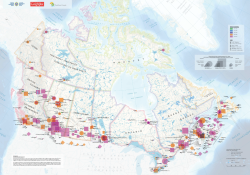
Floods in Canada has a focus on developing an awareness in students of where floods typically happen in Canada and how to use maps to better understand flood patterns and to make flood predictions.
The lesson begins by having students locate their community on the map, followed by a class discussion on natural disasters with a focus on flooding.
Next, the class assembles the Flood Smart Tiled Map like a puzzle. Afterwards, in groups of 3-5 the students will complete a map questionnaire that involves deciphering the different map elements. To conclude the lesson, the students will share their answers.
General Assessment
What skills does this resource explicitly teach?
Its goal is to create an understanding of the patterns and risks of flooding and how climate change continues to impact flood risks. Students will gain some experience in reading and interpreting maps.
Strengths
- Engaging activities that suit a wide range of learning styles
- All materials are provided
- Easy to implement lesson with impactful learning
Recommendation of how and where to use it
This resource is best suited for the middle school Science classroom. It helps to address outcomes related to human impacts on the environment and Earth's water systems as well as those related to emergency preparedness and safety in Health and Social Studies units. Outcomes related to map skills could also be achieved.
Relevant Curriculum Units
The following tool will allow you to explore the relevant curriculum matches for this resource. To start, select a province listed below.
- Step 1Select a province
- Alberta
- Step 2Select a grade level
- Grade 5
- Step 3Select a subject
- Science
- Step 4Relevant matches
- Earth Systems: Understandings of the living world, Earth, and space are deepened by investigating natural systems and their interactions.
- Grade 6
- Step 3Select a subject
- Science
- Step 4Relevant matches
- Earth Systems: Understandings of the living world, Earth, and space are deepened through investigating natural systems and their interactions.
- Grade 8
- Step 3Select a subject
- Science
- Step 4Relevant matches
- Freshwater and Saltwater Systems
- British Columbia
- Step 2Select a grade level
- Grade 6
- Step 3Select a subject
- Social Studies
- Step 4Relevant matches
- Global Issues and Governance: Complex global problems require international cooperation to make difficult choices for the future.
- Grade 7
- Step 3Select a subject
- Science
- Step 4Relevant matches
- Science 7: Earth and its climate have changed over geological time
- Manitoba
- Step 2Select a grade level
- Grade 7
- Step 3Select a subject
- Social Studies
- Step 4Relevant matches
- People & Places in the World: World Geography
- Newfoundland & Labrador
- Step 2Select a grade level
- Grade 5
- Step 3Select a subject
- Science
- Step 4Relevant matches
- Weather
- Grade 7
- Step 3Select a subject
- Health Education
- Step 4Relevant matches
- Health: Safety and Environmental Health
- Grade 8
- Step 3Select a subject
- Science
- Step 4Relevant matches
- Water Systems on Earth's Surface
- Northwest Territories
- Step 2Select a grade level
- Grade 6
- Step 3Select a subject
- Social Studies
- Step 4Relevant matches
- Global Issues and Governance: Complex global problems require international cooperation to make difficult choices for the future.
- Grade 7
- Step 3Select a subject
- Science
- Step 4Relevant matches
- Science 7: Earth and its climate have changed over geological time
- Nova Scotia
- Nunavut
- Ontario
- Step 2Select a grade level
- Grade 8
- Step 3Select a subject
- Science & Technology
- Step 4Relevant matches
- Earth and Space Systems: Water Systems
- Prince Edward Island
- Quebec
- Step 2Select a grade level
- Grade 5
- Step 3Select a subject
- Civic Studies
- Step 4Relevant matches
- Culture and Citizenship in Québec: Ecological transition
- Science & Technology
- Step 4Relevant matches
- Living Things
- Grade 6
- Step 3Select a subject
- Civic Studies
- Step 4Relevant matches
- Culture and Citizenship in Québec: Ecological transiton
- Science & Technology
- Step 4Relevant matches
- Living Things
- Grade 7
- Step 3Select a subject
- Civic Studies
- Step 4Relevant matches
- Culture and Citizenship in Québec: Environmental responsibility
- Science & Technology
- Step 4Relevant matches
- The Living World
- Grade 8
- Step 3Select a subject
- Science & Technology
- Step 4Relevant matches
- The Living World
- Saskatchewan
- Yukon Territory
- Step 2Select a grade level
- Grade 6
- Step 3Select a subject
- Social Studies
- Step 4Relevant matches
- Global Issues and Governance: Complex global problems require international cooperation to make difficult choices for the future.
- Grade 7
- Step 3Select a subject
- Science
- Step 4Relevant matches
- Science 7: Earth and its climate have changed over geological time
Themes Addressed
Air, Atmosphere & Climate (2)
- Climate Change
- Weather
Sustainability Education Principles
| Principle | Rating | Explanation |
|---|---|---|
| Consideration of Alternative Perspectives | Very Good | This resource allows students to explore and discover the risks of floods using maps. The provided questionnaire engages the students in a manner that allows them to analyze the mapping data in an unbiased manner. |
Consideration of Alternative Perspectives:
| ||
| Multiple Dimensions of Problems & Solutions | Good | Although the focus is primarily on the environmental aspect of flooding, the teacher can easily extend the discussion during the debrief to include the economic and social impacts. |
| Multiple Dimensions of Problems & Solutions: Effectively addresses the environmental, economic and social dimensions of the issue(s) being explored.
| ||
| Respects Complexity | Good | The questionnaire allows students to consider the depth of the issue of flooding. |
| Respects Complexity: The complexity of the problems/issues being discussed is respected. | ||
| Acting on Learning | Poor/Not considered | This is not a priority of this lesson. Rather it works to develop an awareness of the most common natural disaster in Canada which is flooding. |
| Acting on Learning: Learning moves from understanding issues to working towards positive change — in personal lifestyle, in school, in the community, or for the planet
| ||
| Values Education | Good | The exploration of the map via the questionnaire allows the students to get a firm understanding of the connection of climate change to flooding. This gives them an opportunity to clarify their understanding. Their values on the topic can be further expressed via questions developed by the teacher. |
| Values Education: Students are explicitly provided with opportunities to identify, clarify and express their own beliefs/values. | ||
| Empathy & Respect for Humans | Poor/Not considered | This component is not part of the resource. |
| Empathy & Respect for Humans: Empathy and respect are fostered for diverse groups of humans (including different genders, ethnic groups, sexual preferences, etc.). | ||
| Personal Affinity with Earth | Satisfactory | The resource's focus on flooding and connection to the local community creates a concern for the natural world. |
| Personal Affinity with Earth: Encourages a personal affinity with -the natural world.
| ||
| Locally-Focused Learning | Good | This lesson is relevant to the lives of the students as flooding can occur in most communities. Also, the cards that accompany the lesson include a wide variety of communities from across Canada. |
| Locally-Focused Learning: Includes learning experiences that take advantage of issues/elements within the local community.
| ||
| Past, Present & Future | Very Good | The resource uses a map that illustrates the history of flooding in Canada. The questionnaire creates a link from the past to the present and the students extrapolate the ideas presented with an eye on climate change in the future. |
| Past, Present & Future: Promotes an understanding of the past, a sense of the present, and a positive vision for the future. | ||
Pedagogical Approaches
| Principle | Rating | Explanation |
|---|---|---|
| Open-Ended Instruction | Very Good | The students complete open-ended activities that explore the topic of flooding. |
| Open-Ended Instruction
: Lessons are structured so that multiple/complex answers are possible; students are not steered toward one 'right' answer. | ||
| Integrated Learning | Good |
|
| Integrated Learning: Learning brings together content and skills from more than one subject area
| ||
| Inquiry Learning | Satisfactory | |
| Inquiry Learning: Learning is directed by questions, problems, or challenges that students work to address.
| ||
| Differentiated Instruction | Good | This resource allows students to participate in a variety of different learning situations. The lesson does make some suggestions for modification but there are no concrete strategies for learners who may have difficulty with the material. |
| Differentiated Instruction: Activities address a range of student learning styles, abilities and readiness.
| ||
| Experiential Learning | Satisfactory | Practical experiences in using maps are featured. |
| Experiential Learning: Authentic learning experiences are provided
| ||
| Cooperative Learning | Satisfactory | The students primarily learn from group work and sharing their answers in class discussions. |
| Cooperative Learning: Group and cooperative learning strategies are a priority.
| ||
| Assessment & Evaluation | Good | There are suggestions for the assessment of learning; however, there are no tools provided. |
| Assessment & Evaluation: Tools are provided that help students and teachers to capture formative and summative information about students' learning and performance. These tools may include reflection questions, checklists, rubrics, etc. | ||
| Peer Teaching | Satisfactory | The students primarily learn from group work and sharing their answers in class discussions. |
| Peer Teaching: Provides opportunities for students to actively present their knowledge and skills to peers and/or act as teachers and mentors.
| ||
| Case Studies | Very Good | The primary tools used in this lesson is a map of flooding locations in Canada and information cards that provide case studies of major flooding events across the country. This provides the students with real data to explore the issues. |
| Case Studies: Relevant case studies are included. Case studies are thorough descriptions of real events from real situations that students use to explore concepts in an authentic context. | ||
| Locus of Control | Satisfactory | The amount of choice provided to the students is limited. |
| Locus of Control: Meaningful opportunities are provided for students to choose elements of program content, the medium in which they wish to work, and/or to go deeper into a chosen issue. | ||